Bone Grafting Lynchburg, VA
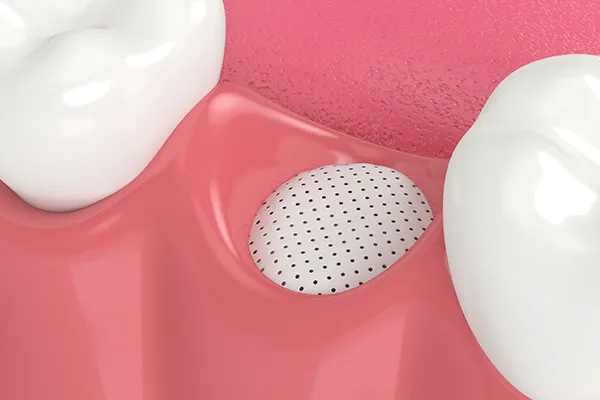 Bone grafting rebuilds jawbone so that a jaw which cannot hold a dental implant today can hold one later, and Mountain State Oral and Facial Surgery performs its own grafting at our Lynchburg, VA office on Graves Mill Road. If another office has already told you implants are not an option for you, that is the single most common reason patients end up on this page, and it is worth understanding what that no usually meant. Bone grafting rebuilds jawbone so that a jaw which cannot hold a dental implant today can hold one later, and Mountain State Oral and Facial Surgery performs its own grafting at our Lynchburg, VA office on Graves Mill Road. If another office has already told you implants are not an option for you, that is the single most common reason patients end up on this page, and it is worth understanding what that no usually meant.
It rarely meant your jaw is beyond help. Much more often it meant the practice you were sitting in does not graft. Grafting is a surgical service with its own imaging, its own materials, and its own risk profile, and a general dental office that places straightforward implants will reasonably decline anything that needs bone built first. That is a scope answer about them, not a verdict about you.
Our surgeons graft, place the implants, and restore them, all inside this practice. The practice-wide bone grafting overview covers the techniques in general terms. Grafting that is planned around dental implants from the first scan runs differently from grafting done for its own sake, and that is the version this office does most.
On This Page
Bone Loss and What a Graft Does About It
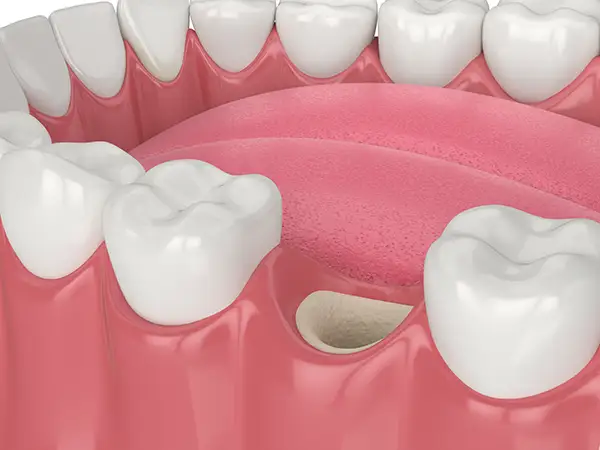 Bone responds to load. A tooth root transmits every bite down into the bone around it, and that pressure is the signal telling your body to keep the bone there. Pull the root out and the signal stops. Within about a year your body has reclaimed a meaningful share of the ridge that used to hold that tooth, and it keeps taking a little more for years afterward. Nothing about this is a complication or bad luck. It is the default. Bone responds to load. A tooth root transmits every bite down into the bone around it, and that pressure is the signal telling your body to keep the bone there. Pull the root out and the signal stops. Within about a year your body has reclaimed a meaningful share of the ridge that used to hold that tooth, and it keeps taking a little more for years afterward. Nothing about this is a complication or bad luck. It is the default.
The practical consequence is a deadline nobody tells you about at the extraction. The bone you have the week the tooth comes out is the most bone you will ever have again, and every month you wait costs you a little of it. That clock, and what it costs you, is what missing teeth and bone loss covers in depth.
What a Graft Is Made Of
A graft is a scaffold plus a barrier. We pack granular mineral material into the deficient area and cover it with a membrane, which stops fast-growing gum tissue from filling the space before slow-growing bone can get there. Your own cells then move into the scaffold and convert it into living bone over several months. The end product is your bone.
Most of the material we place is processed donor mineral from a tissue bank, with its cells removed, which is why it behaves as a scaffold rather than as tissue your immune system has to judge. Synthetic and bovine-derived options behave much the same way, and sometimes a case calls for harvesting a small amount of your own bone from nearby. We often add platelet rich plasma concentrated from a blood draw taken that morning, which puts your own growth factors directly into the site.
Socket Preservation, Done at the Extraction
Socket preservation is graft material placed into the socket the same day the tooth comes out, before the walls have any chance to collapse. It is the smallest grafting we do and the least expensive, and it works better than anything we can do later, purely because it gets there first. If you have an extraction scheduled and implants are anywhere in your future, this is the conversation to have beforehand.
Sinus Lift, for Upper Molars
The maxillary sinus sits right above your upper back teeth, and it expands downward into the space when those teeth are lost. A sinus lift lifts the sinus membrane back up and builds bone underneath it. Recovery runs longer than the other grafts on this list, and the cautions are specific enough to the sinus that we walk through them one by one before you decide.
Ridge Augmentation, for Shape
When a ridge has gone thin rather than short, or has lost contour in both directions, ridge augmentation rebuilds the width and height an implant needs to be surrounded by bone rather than perched on it.
Which of these you need is decided by a scan. Some cases need two of them.
Your Surgical Team in Lynchburg
Our surgeons include board-certified oral and maxillofacial surgeons, several of them certified by the American Board of Oral and Maxillofacial Surgery, and the roster is published on Meet Our Doctors. Oral and maxillofacial surgery is a hospital-based residency covering jaw anatomy, sinus anatomy, and anesthesia, which is the exact overlap a grafting case sits on top of.
The judgment call in grafting is almost never whether to do one. It is how much bone to build, in which direction, and whether the site can accept an implant at the same visit or has to heal first. Get that wrong in the optimistic direction and the implant fails eighteen months later. Our surgeons are the ones who will place the implant into whatever they build, which is a useful thing to have riding on the decision.
Because this is a full-scope practice, the parts of your case that are not the graft stay here too. Extractions, sinus work, sedation, and the restoration afterward all sit with the same team, on one set of records, rather than being spread across three offices that have to call each other.
From Graft to Implant, and How Long It Really Takes
We would rather tell you the timeline now than have you find out at appointment three. Grafting adds months, not weeks, and a patient who was not told that is a patient who feels misled. Here is the whole arc.
| 1. |
Consultation and 3D scan. A 3D Cone Beam scan measures bone height, width, and density. Flat X-rays cannot show width at all, which is why patients get told they have plenty of bone and then told otherwise. You leave knowing which graft you need, whether it pairs with an extraction, and the real calendar
|
| 2. |
The grafting appointment, usually under an hour. We open the site, place the material and often platelet rich plasma with it, set the membrane, and close. You choose comfort beforehand from our anesthesia options: local, nitrous oxide, or IV sedation. Exparel, a non-opioid anesthetic, can hold the site numb well past the drive home
|
| 3. |
Two weeks of ordinary recovery. Swelling peaks around day two or three, then drops off. Soft food, no smoking, and leave the site alone. The occasional loose granule in the first few days is normal rather than a sign of failure
|
| 4. |
Three to six months of waiting. This is the part that cannot be compressed, because your cells are doing the work on their own schedule. Bigger grafts and sinus lifts run to the long end. Placing an implant into immature bone is the most reliable way to lose the implant and the graft together
|
| 5. |
Re-scan, then place. We scan again and look at the actual millimeters before committing. If the bone is there, the implant goes in. If it is close but not there, we wait, and occasionally a site needs a smaller second graft. Recovery from the placement itself follows what we publish for post-operative implant care, and most patients find it milder than the graft was |
Add it up and most Lynchburg grafting patients are looking at roughly nine months to a year from first consultation to a finished tooth, sometimes longer. That number is unwelcome and it is real, and it is much easier to hear at the start than in month four.
Why Grafting Is Worth the Wait
Nobody wants a bone graft. What people want is a tooth, and grafting is the price of admission when the bone is not there. The return on that price is worth being specific about.
It Reopens a Door That Was Closed
The most valuable thing grafting buys is the option itself. If you were turned away elsewhere, the constraint was usually the other office’s scope rather than your anatomy, and our surgeons graft, place, and restore under one roof. A no from a practice that does not graft is not a second opinion.
It Protects the Shape of Your Face
The lower third of your face is held up by the ridge. As bone goes, the chin rotates forward and lip support drops away, and the result reads as aging rather than as tooth loss. Building the ridge back preserves that architecture. It is the same reason our practice argues against riding out a shrinking ridge under a plate for another decade.
It Protects the Implant You Are Paying For
An implant needs bone on every side, not just underneath. Grafting to an adequate volume first is what keeps that implant stable for decades rather than for a few years. Skipping the step to save time is a false economy that we see the results of regularly.
Your Own Biology Gets Help
Platelet rich plasma from your own blood goes into many of our graft sites, putting concentrated growth factors where the healing has to happen. Outcomes still vary with your health, your habits, and the size of the defect. No surgeon can promise you that a graft always takes, and we will not.
Why Choose Our Lynchburg Office for Bone Grafting
 Grafting demands four things at once: imaging that measures in three dimensions, a surgeon trained in the anatomy, anesthesia that makes the appointment tolerable, and someone who will still own the site when an implant goes into it half a year later. Most general practices have one or two of those. Our surgeons run the full scope of oral and maxillofacial surgery and graft in-house, which covers all four. Grafting demands four things at once: imaging that measures in three dimensions, a surgeon trained in the anatomy, anesthesia that makes the appointment tolerable, and someone who will still own the site when an implant goes into it half a year later. Most general practices have one or two of those. Our surgeons run the full scope of oral and maxillofacial surgery and graft in-house, which covers all four.
The measurement is the part you can verify for yourself. Whether your site needs a graft, and how much, is a number, and our 3D cone beam and digital imaging produce it before anyone quotes you a plan. Our Lynchburg office on Graves Mill Road belongs to a practice with offices across West Virginia, Kentucky and Virginia, which is why the scanner is here in town. If the case widens into oral surgery in Lynchburg beyond the graft, it does not leave the building.
And we are willing to talk you out of it. Some sites do not need grafting at all and a shorter or narrower implant solves it. Some patients should not have elective surgery this year. You will hear that at the consultation rather than after you have paid a deposit.
Bone Grafting Cost and Financing
Finding out that implants come with a graft attached is a bad surprise, and pretending otherwise helps nobody. It is an extra cost on top of what you came in for. It is also usually a modest share of the overall implant treatment, and the alternative math is worse: an implant placed into thin bone tends to fail, and then you are paying for the graft anyway plus a replacement implant plus another year.
Your estimate moves on which graft, how many sites, whether it rides along with an extraction you are already scheduled for, whether platelet rich plasma is included, and the anesthesia you pick. Adding socket preservation to an extraction you are already having barely moves the number, because the appointment, the anesthesia, and the access are all paid for either way. A sinus lift is the most involved.
Grafting is one of the areas where medical coverage occasionally applies instead of dental, particularly when the bone loss is tied to a documented health issue. Our team checks both sides before you commit, and payment plans sit next to coverage details in our financial and insurance information.
Schedule Your Lynchburg Consultation
If you have already been told no, bring that history in and let us take our own scan before you accept it. Call our Lynchburg office at (434) 316-7111, or request an appointment online. We are at 1612 Graves Mill Road, Lynchburg, VA 24502. Our Lynchburg hours are 8:00 to 5:00, Monday through Friday.
Frequently Asked Questions
Another office told me I am not a candidate for implants. Is a second opinion worth it?
Usually, yes, and the reason is scope rather than disagreement. A practice that does not perform grafting has to decline a case that needs bone built first, so the answer you got may have been about their capabilities rather than your jaw. Bring your existing scan if you have it. We will still take our own, because bone width is the measurement that most often changes the verdict, and it is the one flat X-rays cannot show. Our page on candidacy for dental implants covers the rest of the criteria.
How much bone does a dental implant actually need?
As a working rule, an implant wants at least a millimeter or two of your own bone surrounding it on every side, which usually translates to a ridge a few millimeters wider than the implant itself and enough height to clear the nerve below or the sinus above. Those margins are why width matters as much as height, and why a ridge that looks tall on a panoramic X-ray can still be unusable. Your scan gives us the actual figures for your jaw.
Can I keep wearing my denture while the graft heals?
Usually yes, with modification, and this is worth raising before the surgery rather than after. A denture pressing directly onto a fresh graft can compress it and cost you volume, so we relieve the underside over the site and often add a soft liner. For the first week or two we may ask you to keep it out as much as you reasonably can. Nobody is asking you to go without teeth for six months.
Am I too old for a bone graft?
Age by itself is not a disqualifier, and patients in their eighties graft and heal successfully when their health supports it. What matters is your health rather than your birth year: circulation, healing capacity, whether you smoke, how controlled your diabetes is, and certain bone medications, particularly IV bisphosphonates and related drugs, which genuinely do change the calculation. Bring your full medication list to the consultation, because that list is more likely to change our answer than your age is.
What can go wrong with a bone graft?
The realistic risks are infection, the membrane becoming exposed through the gum, and the graft simply producing less bone than we planned for. All three are manageable and none is common, and a partial result is far more likely than a total loss. Sinus lifts add the possibility of a small perforation of the sinus membrane, which we repair during the same appointment when it happens. The honest summary is that grafting is a low-drama procedure with a slow timeline rather than a risky one with a fast payoff.
Can anything speed up graft healing?
Not dramatically, and be skeptical of anyone who claims otherwise. What we can do is give your own biology better conditions: platelet rich plasma drawn from your blood at the appointment puts concentrated growth factors right into the site. What you can do matters more than most patients expect. Stopping smoking around the surgical window is the single largest lever available, ahead of anything we add to the graft.
Is bone grafting billed to my medical or my dental insurance?
It can be either, and which one you use often changes what you pay. Grafting tied to a documented extraction or a health condition sometimes goes to medical, while grafting framed as preparation for an elective implant usually goes to dental, where annual maximums are low. That split is worth sorting out before the appointment rather than after the claim. Our team checks both and walks you through what each one covers alongside our insurance and financing options.
Will I need a sinus lift or just a routine graft?
It comes down to which teeth you lost. Sinus lifts belong to the upper back jaw, where the sinus sits directly above the molar roots, so lower teeth never need one and upper front teeth almost never do. If you lost upper molars years ago, the odds go up. Your cone beam scan answers it in one visit, and we cannot promise in advance that a routine graft will be enough to avoid one.
|