Oral Surgery Lynchburg, VA
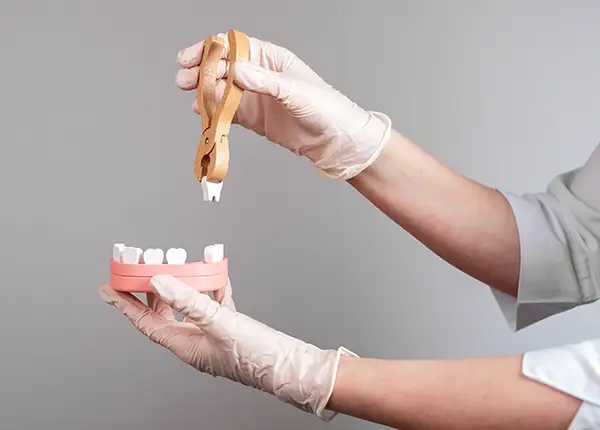 Oral and maxillofacial surgery is the branch of dentistry that handles the mouth, teeth, and jaws surgically, and Mountain State Oral and Facial Surgery practices the full scope of it in Lynchburg, VA at 1612 Graves Mill Road. Wisdom teeth, complicated extractions, bone grafting, jaw repositioning, facial trauma, and biopsies of anything in your mouth that shouldn’t be there. Oral and maxillofacial surgery is the branch of dentistry that handles the mouth, teeth, and jaws surgically, and Mountain State Oral and Facial Surgery practices the full scope of it in Lynchburg, VA at 1612 Graves Mill Road. Wisdom teeth, complicated extractions, bone grafting, jaw repositioning, facial trauma, and biopsies of anything in your mouth that shouldn’t be there.
Two things separate this from your regular dental office. The training is longer, and the range is wider. Our surgical procedures section covers the whole list practice-wide, and everything on it happens here.
The Lynchburg office runs 8:00 to 5:00 Monday through Friday, which is later than our West Virginia offices close. If you’re trying to fit a consultation around a full workday, that hour is the difference.
On This Page
What Oral and Maxillofacial Surgery Covers
 Eight procedures make up the published scope of this practice. Most people can’t tell whether they need an oral surgeon because nobody has ever laid out what one actually does, so here is the whole list. Eight procedures make up the published scope of this practice. Most people can’t tell whether they need an oral surgeon because nobody has ever laid out what one actually does, so here is the whole list.
- Tooth extractions
– Teeth that are broken below the gumline, badly decayed, or wrapped around a nerve. The ones your dentist would rather not chase.
- Wisdom teeth removal
– Third molars that are impacted, angled into the tooth in front of them, or simply have nowhere to go. Usually late teens to mid twenties, and usually all four at once.
- Bone grafting
– Rebuilding a jaw ridge that has thinned after tooth loss, so it can hold an implant later. Three to six months to mature.
- Orthognathic surgery
– Moving the upper jaw, the lower jaw, or both into a position where they finally line up. Almost always coordinated with an orthodontist, and it fixes function as much as appearance.
- Oral pathology
– Biopsy and diagnosis of sores, lumps, patches, and color changes that don’t clear up. Most are harmless. Establishing which is the reason to come in.
- Platelet rich plasma
– A concentrate spun from your own blood and placed at a surgical site to speed healing.
- StemSave
– Banking the stem cells inside a tooth that’s being removed anyway, rather than throwing them away.
- Dental trauma
– Teeth knocked out or loosened by an accident, and the fractures that come with them. Time-sensitive in a way none of the others are.
Replacing a tooth once it’s out is a separate track, and dental implants in Lynchburg covers that one. What’s missing from the list matters too. No cleanings, fillings, crowns, or root canals. Your general dentist keeps that half of your care, and we stay on the surgical half.
Who Performs Your Surgery
An oral and maxillofacial surgeon starts as a dentist and then completes a hospital-based surgical residency in the specialty. That’s the gap what an oral surgeon does explains in patient terms: your dentist handles the teeth that cooperate, and the specialty exists for the ones that don’t.
Ours include board-certified oral and maxillofacial surgeons, several holding American Board of Oral and Maxillofacial Surgery certification. Our surgeons cover eleven offices, so we won’t promise you a specific name on a specific day, but each of them works from the same protocols. Their degrees and training are listed under Meet Our Doctors.
We’re new to Lynchburg and there’s no point pretending otherwise. What isn’t new is the training behind whoever is holding the instrument, and that’s the part that decides how your case goes.
Your Visit, Step by Step
 Two appointments cover most cases. The first is diagnostic and the second is the procedure, and the gap between them is usually days rather than weeks. Two appointments cover most cases. The first is diagnostic and the second is the procedure, and the gap between them is usually days rather than weeks.
Scan and Plan
A 3D Cone Beam scan at the first visit gives us the jaw in three dimensions rather than as a flat X-ray, which is what lets us see where the nerve canal runs, how the roots are shaped, and how much bone is where. That scan is why surprises during the procedure are rare. You leave with a plan, a timeline, and a straight answer about what it will take.
Pick Your Anesthesia
Local anesthesia numbs the site and nothing else. Nitrous oxide adds calm and clears before you drive home. IV sedation, often called twilight sedation, is the one we recommend for wisdom teeth, and it means you won’t remember the appointment. General anesthesia covers the largest cases, and a hospital is typically where that one happens. Our anesthesia options are worth reading beforehand. Deciding this at home beats deciding it once you’re already reclined.
The Procedure
Most of what we do takes less time than the paperwork suggests. A straightforward extraction is a matter of minutes. Four impacted wisdom teeth is closer to an hour. Where it fits we use Exparel. It’s a long-acting local analgesic, opioid-free, cleared by the FDA for patients as young as six, and it holds the numbness well past your drive home.
Afterward
You leave with written surgical instructions and a direct number. Swelling builds for two to three days before it turns around, so judge your recovery on day four rather than day one. For extractions most people are back to normal inside a week. Grafts and jaw surgery ask for considerably more, and we tell you which category you’re in before you book, not after.
When Surgery Is the Right Call
Not every problem needs a surgeon, and nothing written down beats a scan for telling you which category you’re in. A few patterns come up often enough to name, though. If you recognize yourself in one, the consultation is probably worth the hour.
| • |
Your dentist has already tried – A tooth that fractured during an attempt, or one your dentist looked at and declined. That’s not a failure on their part; it’s the referral system working.
|
| • |
Something has been there too long – A sore, patch, or lump in your mouth that hasn’t healed after two weeks. Two weeks is the line clinicians use, because ordinary irritations clear well inside it. The large majority turn out to be harmless; the point of looking is the minority that aren’t.
|
| • |
The pain moves – Wisdom tooth pain that radiates into the ear, the jaw, or the side of the head is usually pressure rather than decay, and pressure doesn’t resolve on its own.
|
| • |
You’ve been told there isn’t enough bone – That’s a grafting conversation, not a closed door, and it’s one of the more common reasons people end up here.
|
| • |
Your bite has never worked – Chewing that has always been effortful, or a jaw that visibly doesn’t line up, is an orthognathic question that braces alone won’t answer. |
If none of that describes you, keep seeing your dentist and don’t let anyone talk you into a procedure. We’d rather see you once and tell you it can wait than start something you didn’t need.
The Case for Our Lynchburg Office
The Lynchburg office is at 1612 Graves Mill Road, open weekdays 8:00 to 5:00. It’s one of eleven Mountain State locations across West Virginia, Kentucky, and Virginia, working from the practice’s protocols rather than inventing its own.
Breadth is the argument. Extractions, grafting, pathology, trauma, and jaw surgery all sit with the same group of surgeons, which matters on the day a case turns out to be two cases. Nothing gets referred out, re-imaged, and re-explained to somebody new.
For Referring Dentists and Orthodontists
We take referrals across the full surgical scope, we keep your patient informed about what happens next, and we return them to your chair with the records complete and the surgical phase closed out. Our information for referring doctors covers imaging, records, and how we report back. If you want to talk a case through before sending it, call (434) 316-7111 and we’ll have a surgeon call you back.
What Oral Surgery Costs
The range is too wide for a number to mean anything. One erupted tooth and a double-jaw orthognathic case sit at opposite ends of it. Your figure turns on the number of teeth, the depth of any impaction, your anesthesia choice, the need for grafting, and which policy the case lands under.
That last piece is worth understanding before you get a bill. Oral surgery straddles medical and dental coverage in a way ordinary dentistry doesn’t. Wisdom teeth, trauma, pathology, and jaw surgery frequently bill to medical; extractions and implants usually bill to dental; some cases split. Two plans means two deductibles and two sets of rules, and getting it filed right is not something you should have to manage yourself. Our team sorts it before treatment starts. The financial and insurance information lists what we accept and lays out the payment plans available for the balance.
Schedule Your Lynchburg Visit
One consultation is usually enough to know where you stand. Call us at (434) 316-7111 to book it. You can also request an appointment online and we’ll call back with times. Our office is at 1612 Graves Mill Road, Lynchburg, VA 24502.
Frequently Asked Questions
What does an oral surgeon do that a dentist cannot?
Legally, less than you’d think; practically, quite a lot. A general dentist is licensed to extract teeth and many do it well. The difference is the residency: years of hospital-based surgical training that cover impacted teeth, jaw repositioning, facial trauma, and administering deep sedation. It’s the difference between someone who can do a procedure and someone who does that procedure all day.
How soon can I be seen at the Lynchburg office?
Consultations are usually easier to book than surgical dates, because the first visit is imaging and talking while the second needs a block of time held open. Call the office for current openings, since those shift week to week. What doesn’t shift is the hours: weekdays until 5:00, later than our West Virginia offices close, so a late-afternoon slot rarely costs you a vacation day. Dental trauma gets worked in the same day rather than scheduled.
Is oral surgery covered by medical or dental insurance?
It depends on the procedure, and unusually for dentistry, both are in play. Wisdom teeth, jaw surgery, trauma, and pathology often route to medical coverage. Extractions and implants usually sit with dental. That split is why an oral surgery estimate can look very different from what your dentist quoted for the same tooth, and why we verify both plans before treatment rather than after.
What happens if a mouth sore is biopsied?
We numb the area, take a small tissue sample, and send it to a pathology lab, and the visit is usually over in under half an hour. Results generally come back within one to two weeks. The overwhelming majority of biopsies return something benign, which is worth holding onto during the wait. Oral pathology exists so that the small minority get caught early, when the answer is still simple.
Can a knocked-out tooth be saved?
Sometimes, and the clock is the whole story: the best window is under an hour. Hold the tooth by the crown, never the root, rinse it gently without scrubbing, and if you can, put it back in the socket. If you can’t, keep it in milk or saliva rather than water, and call us on the way. Dental trauma cases get worked into the schedule the same day.
Do you take referrals from dentists in the Lynchburg area?
Yes, across the full surgical scope, and we return patients to the referring practice once the surgical phase is finished. Our information for referring doctors covers records, imaging, and how we communicate back. Patients can also book directly without a referral, so nobody gets stuck waiting on paperwork to be seen.
How long does jaw surgery recovery take?
Two to three weeks before returning to work or school, and closer to a year before the bone has fully remodeled and the final result settles. It’s the longest recovery of anything on our list by a wide margin, which is why orthognathic surgery gets planned months ahead alongside your orthodontist rather than scheduled on short notice. Nobody should be talked into it quickly.
Am I too old to have my wisdom teeth removed?
No, but it does get harder with age, and that’s worth knowing rather than glossing over. Roots lengthen and bone density increases through your twenties and thirties, so a tooth that would have come out easily at nineteen takes more work at forty and heals more slowly. If the tooth is causing problems, age is a reason to move sooner rather than a reason to skip it.
|