Facial Trauma Surgery Charleston, WV
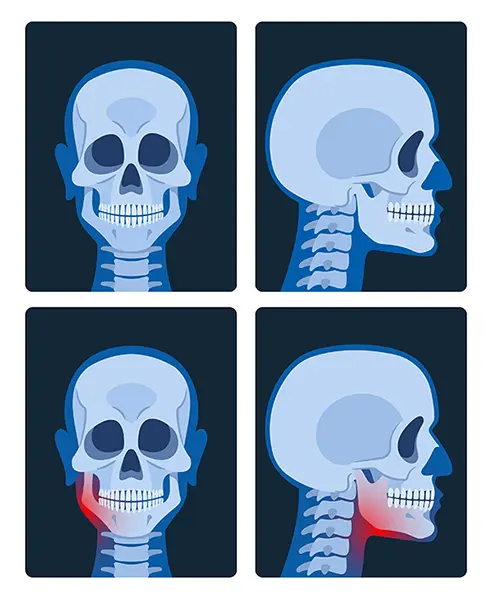 Facial trauma surgery repairs the bones and soft tissue of the face after an injury, and it is part of the full scope of oral and maxillofacial surgery our surgeons provide in Charleston, WV. Broken jaws, fractured cheekbones and eye sockets, and deep facial lacerations all sit inside it. Facial trauma surgery repairs the bones and soft tissue of the face after an injury, and it is part of the full scope of oral and maxillofacial surgery our surgeons provide in Charleston, WV. Broken jaws, fractured cheekbones and eye sockets, and deep facial lacerations all sit inside it.
If someone you love is in an emergency room right now with a facial injury, this is the work our surgeons do, and the fastest route to us usually runs through the doctor already standing next to them. Ask that doctor to call Mountain State Oral and Facial Surgery at 304-343-5161.
If you are reading this later, after the swelling has gone down and something still does not sit right, that is worth a call too. Facial fractures that heal out of position do not correct themselves, and the conversation about fixing them starts the same way. Facial trauma surgery is one part of the surgical procedures our team handles.
On This Page
What Facial Trauma Covers
 Facial trauma can mean any injury to the jaw bone, the facial bones, or the tissue over them. What you need done depends on where the injury is and how bad it is, and those two things are worth separating early, because they lead to different places. Facial trauma can mean any injury to the jaw bone, the facial bones, or the tissue over them. What you need done depends on where the injury is and how bad it is, and those two things are worth separating early, because they lead to different places.
The injuries our surgeons treat most often in this category are facial bone fractures, including cheekbones and eye sockets; fractured or dislocated jaw bones; and cuts or lacerations to the face and mouth. Those are the bone and soft-tissue side of facial trauma, and they are what this page is about.
Teeth are a different problem with a different clock. A knocked-out, cracked, or displaced tooth is dental trauma, and it has its own page and its own urgency window. If the injury is to a tooth rather than to the bone underneath it, dental trauma is where to go. A serious impact often causes both at once, and when it does our surgeons handle both. The distinction matters for finding the right information quickly, not for finding the right surgeon.
How These Injuries Reach Us
Vehicle collisions, falls, sports, and workplace accidents account for most of what we see. There is no meaningful pattern beyond that. Facial bones break because something hard met them faster than they could get out of the way.
Almost none of these injuries arrive by appointment, and this is the part worth being plain about. A significant facial injury belongs in an emergency department first, not in a waiting room. Emergency physicians rule out the things that matter more than a broken cheekbone, which is head injury, airway, eyes, and spine, and they bring in an oral and maxillofacial surgeon once the picture is clear. That sequence is not a delay. It is the reason facial fractures get repaired by someone who knows what else was ruled out first.
What that means practically: if the injury just happened, go to the emergency department or call 911. If you are already there, ask the physician to contact us. If the injury is days or weeks old and healing badly, call our office directly.
Your Facial Trauma Team in Charleston
Our surgeons include board-certified oral and maxillofacial surgeons, several of them certified by the American Board of Oral and Maxillofacial Surgery. Facial trauma is where that training earns its keep, because an oral and maxillofacial surgeon trains in the facial skeleton itself: the bone, the bite that has to work afterward, and the soft tissue over both.
That combination is unusual and it is the reason these cases route to this specialty. A fractured jaw is not only a broken bone. It is a broken bone that has to close correctly against the opposite arch for the rest of a person’s life, and setting it well takes someone who understands both. Our roster and its credentials are published on Meet Our Doctors.
From Assessment to Repair
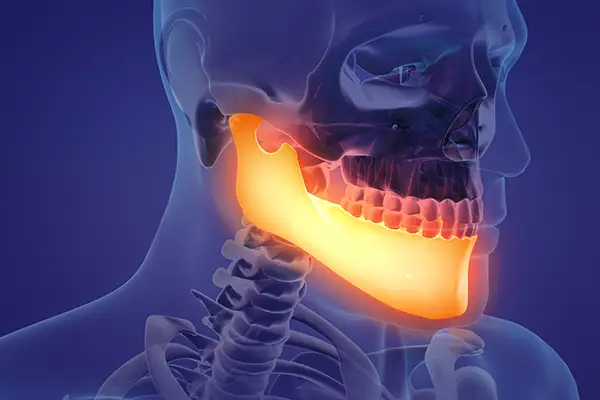 Assessment comes first, and imaging carries most of it. Facial bones are layered over each other, so a flat film can hide a fracture completely. 3D Cone Beam imaging is one of the tools our practice uses to see the break in three dimensions, and you can read about it alongside the rest of our dental technology. Assessment comes first, and imaging carries most of it. Facial bones are layered over each other, so a flat film can hide a fracture completely. 3D Cone Beam imaging is one of the tools our practice uses to see the break in three dimensions, and you can read about it alongside the rest of our dental technology.
Anesthesia is the next question, and we will state it the way our practice states it: general anesthesia is necessary for complex cases such as facial trauma, and our surgeons usually perform it in a hospital setting. That is not a warning. It is the honest shape of this kind of repair, and the details of every option sit on anesthesia options.
Then the repair itself. Facial bones have to be stabilized to heal properly, the same as any other bone, but they cannot be held in a cast. Instead our surgeons use small screws, plates, and wires to hold the bone in position while it knits. Those go in beneath the skin, where they stay invisible, and they are placed to keep your appearance intact rather than only to fix the bone. Cuts and lacerations are closed with sutures chosen for minimal scarring.
A break that was never set, or was set badly, becomes a different operation months later. It borrows heavily from how our surgeons approach orthognathic surgery, where moving the facial skeleton and landing the bite correctly is the entire exercise.
Restoring Both Function and Appearance
Two things have to come back, and only one of them is visible. Appearance is what people notice. Function is what they live with: chewing, speaking, opening wide enough to eat a sandwich, closing so the teeth meet where they used to.
Function is the harder of the two and it is the one that gets compromised when a fracture is set by someone thinking mainly about the outside. A jaw can look right and bite wrong. Our surgeons plan around the bite from the start, because there is no reasonable way to go back and fix it later once bone has healed around a bad position.
Appearance matters too, and the goal is that nobody can tell. Hardware stays under the skin. Incisions get placed where they hide. Patients who have been through it are the better witnesses here, and some of them tell their own stories on our facial trauma patient stories.
Why Emergency Departments and Dentists Refer Here
Because facial trauma is not a service this practice bolted on. It sits alongside the jaw surgery, the extractions, and the reconstruction our surgeons already do, drawing on the same anatomy and the same hands.
The practical reasons a referring physician or dentist picks up the phone are narrow and they are the right ones. Our surgeons are credentialed and experienced in administering anesthesia, and a hospital operating room is not unfamiliar ground for them, which is where complex facial trauma gets repaired. And this is one practice with eleven offices across West Virginia, Kentucky, and Virginia rather than a single address, which is worth raising early when you are working out where follow-up will land.
If you are a dentist or a physician sending someone our way, our referring doctor information covers what we need from you. If you are a family member, none of that is your job. Call and we will work it out.
Insurance After a Facial Injury
Facial trauma is the one area of our work where the money question usually has a different answer than patients expect, and it is worth knowing early. Injuries are frequently handled under medical insurance rather than dental, and where an accident is involved, auto or workers’ compensation coverage may carry part of it instead.
That is genuinely good news for most families, and it is also why nobody can tell you a number from here. What is covered depends on the policy, on how the injury happened, and on what the repair turns out to require once the imaging is read. Our team will work through the actual benefits with you rather than guess at them, and coverage, financing, and payment plan details are on insurance, financing, and payment options.
What we would not want is for a family to delay care over a cost question that has not been asked yet. Call our Charleston office at 304-343-5161 and ask. The answer is usually better than the fear.
Reach Our Charleston Office
If the injury is happening now, the emergency department is the right door. For everything after that, call 304-343-5161. Our Charleston office is at 869 Oakwood Rd, Charleston, WV 25314. You can also request an appointment online for a follow-up, a second opinion, or a fracture that healed badly and needs another look.
Frequently Asked Questions
My family member is in the ER with a broken jaw. What happens next?
The emergency physician stabilizes and rules out the injuries that outrank a jaw, then brings in an oral and maxillofacial surgeon. Your job is smaller than it feels: ask the physician to contact Mountain State Oral and Facial Surgery, and make sure someone writes down which hospital and which doctor. Repair is often not the same day, because swelling has to settle before bone can be set accurately, and that wait is deliberate rather than a delay.
Will the plates and screws stay in permanently?
Usually, and you will not know they are there. They sit beneath the skin, they do not normally trouble airport security, and most patients never think about them again after the first few months. They come out only when there is a reason, which is uncommon. Their whole job is holding bone still long enough to knit, and once that has happened they are simply along for the ride.
Is facial trauma surgery done in the office or in a hospital?
Complex facial trauma needs general anesthesia, and our surgeons usually perform general anesthesia in a hospital setting. Smaller repairs can be a different story, and a laceration or a simple fracture may not need any of that. Which one yours is gets decided from the imaging rather than from a preference, and anesthesia options lays out the full range.
Will there be a visible scar on the face?
Minimal scarring is one of the things our surgeons plan for rather than hope for. Many facial fractures can be reached from inside the mouth, which leaves nothing on the outside at all. Where an external incision is needed, it gets placed in a line or a shadow that hides it. Scars fade for a year or more after surgery, so what you see at six weeks is not the finished result.
My cheekbone was broken months ago and my face looks different. Is it too late?
Often not, and this is worth a consultation rather than a guess. A fracture that healed out of position can be re-broken and reset deliberately, which is a planned reconstruction rather than an emergency repair. It is harder than getting it right the first time and it is done regularly. Bring whatever imaging exists from the original injury if you can get a copy.
Does my dental insurance cover a broken jaw?
More often it is medical insurance that carries it, since a facial fracture is treated as a medical injury rather than a dental one. If a vehicle or a workplace was involved, auto or workers’ compensation may be primary instead. This surprises people in a good direction reasonably often, which is why it is worth asking before assuming you cannot afford care.
What if teeth were knocked out in the same accident?
Both get handled, and the teeth are frequently the more time-sensitive half. A knocked-out tooth has a short window where reimplantation can work, and that clock runs faster than the one on a fracture. Our dental trauma page covers what to do with the tooth itself in the first thirty minutes, including how to transport it. Bring it with you either way.
How long does recovery from a facial fracture take?
Bone generally needs about six weeks to knit, though what you can eat and when you feel normal follow their own schedules. Swelling and bruising resolve well before the bone does, which fools people into thinking they are further along than they are. Your surgeon will give you a timeline built on your specific fracture, and the honest version of it is worth more than an average.
|