Jaw Surgery Lynchburg, VA
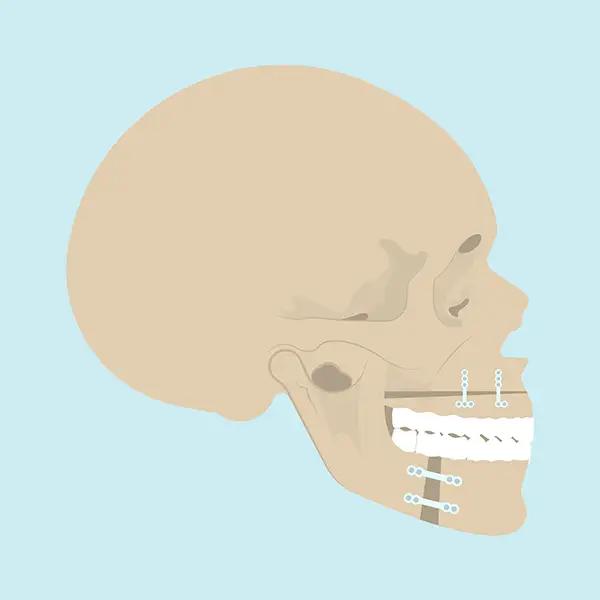 Jaw surgery in Lynchburg, VA is a skeletal correction: Mountain State Oral and Facial Surgery moves the upper jaw, the lower jaw, or both into a position where your teeth actually meet, then holds them there while the bone heals. The clinical name is orthognathic surgery. The reason it exists is simple enough: some bites are wrong because of where the teeth sit, and some are wrong because of where the jaws sit. Only the second kind needs a surgeon. Jaw surgery in Lynchburg, VA is a skeletal correction: Mountain State Oral and Facial Surgery moves the upper jaw, the lower jaw, or both into a position where your teeth actually meet, then holds them there while the bone heals. The clinical name is orthognathic surgery. The reason it exists is simple enough: some bites are wrong because of where the teeth sit, and some are wrong because of where the jaws sit. Only the second kind needs a surgeon.
This is a two-specialist procedure, and that shapes everything about how it runs. An orthodontist moves your teeth into position before and after. We do the part in the middle. Neither half works without the other, which is why the sequence, rather than the operation, is what patients end up asking about most. Our orthognathic surgery overview covers the clinical side across the practice.
Our Lynchburg office on Graves Mill Road handles the consultation, the imaging, the planning, and every follow-up, Monday through Friday from 8:00 AM to 5:00 PM. That matters more than it sounds like it should. A jaw surgery case is a year or more of appointments, and most of them are the short routine kind that shouldn’t cost you a long drive.
On This Page
Understanding Orthognathic Surgery
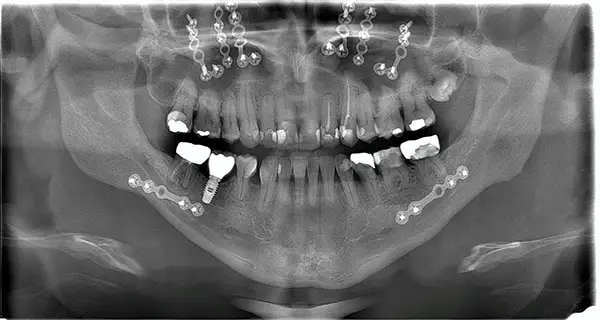 The jaws are bones, and bones don’t respond to braces. That one fact separates a case an orthodontist can finish alone from a case that needs an operating room. When the upper and lower jaw are mismatched in size or position, orthodontic treatment can tilt the teeth toward each other until they touch, but the bones stay exactly where they were and the teeth spend the rest of their working life compensating for a discrepancy that never went away. The jaws are bones, and bones don’t respond to braces. That one fact separates a case an orthodontist can finish alone from a case that needs an operating room. When the upper and lower jaw are mismatched in size or position, orthodontic treatment can tilt the teeth toward each other until they touch, but the bones stay exactly where they were and the teeth spend the rest of their working life compensating for a discrepancy that never went away.
The correction itself is mechanical. We separate the bone at planned locations, move the segment into the position the plan calls for, and fix it there with titanium plates and screws. The bone then heals across the gap much the way any fracture does. What has changed permanently is where the jaw sits.
The conditions that lead here are mostly the ones you can see or feel: an underbite, a pronounced overbite, front teeth that never touch, one side of the jaw longer than the other, or chewing and speech that take more effort than they should. If some of that sounds familiar and orthodontic treatment has already had a go at it, the skeleton is the likely reason. Where the teeth themselves have worn down or failed along the way, the plan can widen into full mouth reconstruction rather than jaw surgery alone.
Who Is a Candidate?
Adults and older teenagers whose growth has finished. We verify that with imaging rather than a birth date, because jaws finish on their own timetable, and moving one that still has growing left to do invites the correction to shift years later.
The second candidacy question is whether you have an orthodontist. Jaw surgery without orthodontic treatment on either side of it produces a jaw in the right place and teeth that still don’t fit together. If you’re starting from scratch in Lynchburg, we’ll point you toward orthodontists in the area who take surgical cases before we plan anything at all.
Your Oral Surgery Team in Lynchburg
Orthognathic surgery sits at the far end of what oral and maxillofacial surgeons train for, alongside facial trauma. Our surgeons include board-certified oral and maxillofacial surgeons, several of them certified by the American Board of Oral and Maxillofacial Surgery, and Meet Our Doctors carries the current roster.
Lynchburg is one of our offices across West Virginia, Kentucky, and Virginia, and the surgeons who see you on Graves Mill Road are the same ones handling orthognathic cases at the rest of them. Having the office nearby doesn’t mean a different standard of surgeon; it means the planning, the scans, and the year of follow-ups happen close to home.
We’re direct about the division of labor, because it’s the thing that goes wrong when nobody says it out loud. We do the surgery and the surgical planning. Your orthodontist does the tooth movement. We don’t take that work on ourselves, and we don’t hand your case off to another surgeon once it’s underway.
The Co-Treatment Sequence and Timeline
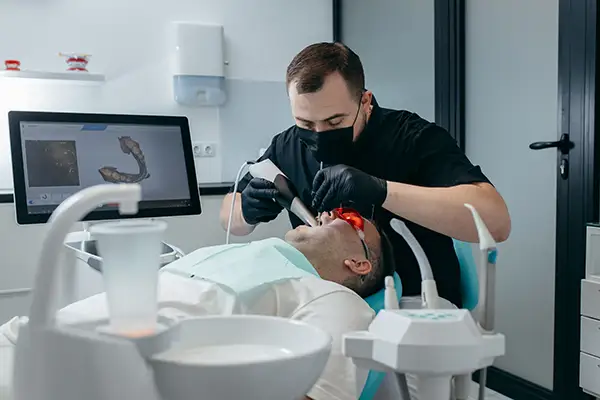 How long does this take? Longer than almost anyone expects. Plan on well over a year from the first orthodontic appointment to the last, and in plenty of cases closer to two. How long does this take? Longer than almost anyone expects. Plan on well over a year from the first orthodontic appointment to the last, and in plenty of cases closer to two.
- Diagnosis and records – a 3D Cone Beam scan and a Trios 5 digital scan of your teeth, both taken at Graves Mill Road. Together they become the virtual model your surgery gets planned on.
- Decompensation – your orthodontist deliberately moves your teeth into their true positions over the bone, which usually runs twelve to eighteen months. Your bite often looks worse during this phase. It has to: the camouflage is coming off before the jaws move.
- Surgical planning – we re-scan once the arches are ready and map the movements to the millimeter. You go through the plan with the surgeon before a date is set.
- Surgery – one day, under general anesthesia. Our surgeons usually perform general anesthesia in a hospital setting, so this is the one stage that happens away from the Lynchburg office.
- Finishing orthodontics – roughly three months of bone healing, then another six to twelve months while your orthodontist settles the bite into its final position.
Recovery is the part patients under-plan for. The first week brings real swelling and a liquid diet, and weeks two through six are soft foods while the bone consolidates. Most people are back at work or school inside two to four weeks.
The post-surgical checks themselves are short, and they’re all on Graves Mill Road: about a week out, then at roughly one month, three months, and six months as the bone finishes consolidating. With the office open 8:00 AM to 5:00 PM Monday through Friday, most patients fit them around a workday rather than taking one off.
Benefits of Correcting Your Bite
Eating stops requiring a strategy. People with a real skeletal discrepancy build workarounds without noticing: cutting food that other people bite, chewing on one side, steering around anything that needs a clean front-tooth bite. Those habits fall away once the arches meet, and the patients we follow at Graves Mill Road tend to notice that before they notice anything else. Our jaw surgery patient stories cover what the months after surgery actually looked like.
The second benefit is about the teeth you already have. A bite that doesn’t seat spreads force unevenly, and uneven force wears enamel, cracks restorations, and loads the jaw joints in a way they tolerate for years and then stop tolerating. Correcting the skeleton addresses the loading itself instead of repairing what the loading breaks, and it’s the argument our surgeons make most often when a patient asks whether waiting a few years is an option.
It’s permanent, which is worth saying plainly given how long the treatment runs. The plates and screws hold the correction while the bone heals, and once it has healed, the bone is simply the shape it is now. Relapse is uncommon when the orthodontic work on both ends is done properly.
Appearance usually changes too, because the face follows the bones underneath it. We don’t build the case around that, and we’re careful about predicting it: a few millimeters of bone movement reads differently on every face, and swelling hides the answer for weeks either way. Function is what we can commit to working on. The profile comes with it.
Why Lynchburg Patients Choose Our Team
Everything except the operation happens on Graves Mill Road. The consultation, the Cone Beam scan, the planning review, the suture check, and every follow-up through the year afterward are all at the Lynchburg office. For a treatment measured in appointments rather than procedures, that is the difference between a manageable year and a miserable one.
The surgeons are the same across our practice. Our offices in West Virginia, Kentucky, and Virginia share one surgical team, so a Lynchburg case gets planned the same way, by the same people, as a case at our Charleston home office.
We’re here for the referring side of this as well. Orthognathic cases reach a surgeon through orthodontists and general dentists who spot the skeletal component early, and we’d rather be the surgeons the Lynchburg dental community already knows than the ones they look up once a case forces the issue. Jaw surgery is one part of what runs out of Graves Mill Road, and the rest of our oral surgery services in Lynchburg come from the same team.
Jaw Surgery Cost and Coverage
Here’s what most people get wrong about paying for jaw surgery: it’s usually a medical claim, not a dental one. Your dental plan isn’t the one that matters. Your medical plan is, and medical plans do cover orthognathic surgery when the case is documented as medically necessary.
Medical necessity rests on function. A measurable skeletal discrepancy, documented difficulty chewing, speech impairment: those are what a plan reviews. How the correction will look is not part of that conversation, which is one more reason we build the case around function from the first appointment. The price itself moves with which jaws we reposition, whether the chin is involved, and the hospital and anesthesia charges attached to operating in a hospital setting.
Your orthodontist bills their share separately, so budget for two providers rather than one. Our financial and insurance information covers the plans we work with and the payment arrangements available. Call the Lynchburg office at (434) 316-7111 and we can talk through what your case specifically involves.
Book Your Jaw Surgery Consultation in Lynchburg
One appointment tells you whether this is a surgical case or an orthodontic one. Call our Lynchburg office at (434) 316-7111 or request an appointment online. We’re at 1612 Graves Mill Road, Lynchburg, VA 24502. The office is open Monday through Friday from 8:00 AM to 5:00 PM.
Frequently Asked Questions
Can I have the surgery without braces first?
Rarely, and only in a narrow set of cases. Surgery-first protocols exist, but they depend on the arches already sitting close enough that the bite will function right after the operation. Most cases don’t qualify, and skipping decompensation in a case that needed it leaves you with a jaw in the right position and teeth that still can’t meet. We’ll tell you honestly which category you’re in.
Will my lip or chin be numb afterward?
Very likely for a while, if we’re moving the lower jaw. The nerve supplying sensation to the lower lip and chin runs through the lower jaw, and repositioning the bone stretches it. Numbness or a pins-and-needles feeling afterward is expected and usually fades over weeks to months. A minority of patients keep some lasting change in sensation, and that risk rises with age and with the size of the movement. We go through it specifically for your case before you consent to anything.
Will the plates and screws stay in my jaw?
Yes, in almost every case. The titanium plates are small, they sit against the bone underneath the gum and muscle, and they’re meant to stay permanently. You won’t feel them, they won’t set off airport security, and they don’t need replacing. A plate is occasionally removed later if it becomes irritating, but that’s a minor procedure and it’s the exception.
What can I eat while I am healing?
Liquids for roughly the first week: soups, smoothies, anything you don’t have to work at. Weeks two through six are soft foods, so scrambled eggs, pasta, fish, well-cooked vegetables. Most people are back to a normal diet somewhere between six weeks and three months depending on how the bone is consolidating. Our pre- and post-op instructions go through it in detail, and yes, most people lose some weight during this stretch.
Do I need an orthodontist before I see you?
No, and plenty of patients come to us first. If you already have an orthodontist, bring their records and we’ll work from those. If you don’t, we’ll do the workup, tell you whether this is a surgical case at all, and point you toward orthodontists around Lynchburg who take surgical cases. Coming to us first can save time, since a Cone Beam scan answers the surgical question quickly.
Is jaw surgery the same as TMJ surgery?
No. Jaw surgery repositions the jawbones to change how your teeth meet. TMJ surgery addresses the joint itself, the hinge where the lower jaw connects to the skull. The two get confused because a bad bite can strain those joints, and correcting the bite sometimes eases joint symptoms as a consequence. They remain different operations aimed at different structures, and a consultation sorts out which conversation you’re actually having.
How far ahead do I need to plan this?
Start roughly two years out from when you want it finished. The orthodontic phase alone runs twelve to eighteen months before we operate, and medical pre-authorization adds a few weeks on top of that. Patients timing this around a graduation, a wedding, or a deployment usually need to begin the conversation earlier than they expect. Our insurance and financing options list the plans we work with.
I am a general dentist. When should I refer for a jaw surgery consult?
When the problem looks skeletal rather than dental: a Class III profile, an anterior open bite that won’t close, noticeable asymmetry, or a patient whose orthodontic result relapsed. Earlier beats later, particularly with teenagers, because timing the referral around growth changes what we can offer. Our For Doctors section has the referral details, and the Lynchburg office line is (434) 316-7111.
|