Tooth Extraction Roanoke, VA
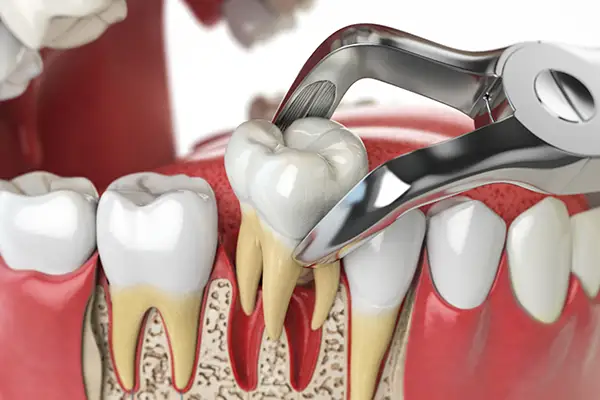 When a dentist says a tooth has to go, Mountain State Oral and Facial Surgery handles tooth extraction in Roanoke, VA from our office on Franklin Road. Almost nobody wants to be here. The first question is whether the tooth is genuinely out of options, and the second, which most people skip, is what goes into the space afterward. When a dentist says a tooth has to go, Mountain State Oral and Facial Surgery handles tooth extraction in Roanoke, VA from our office on Franklin Road. Almost nobody wants to be here. The first question is whether the tooth is genuinely out of options, and the second, which most people skip, is what goes into the space afterward.
Skip the second one and it costs you later. A tooth extraction solves the problem in front of you: the infection, the fracture, the decay that got past saving. What it leaves behind is an empty socket, and the jawbone around that socket begins changing the day the tooth comes out. Deciding what replaces the tooth is far easier before the extraction than after.
Our surgeons handle both halves at the same visit. Our Roanoke office on Franklin Road is equipped for the extraction and, where it makes sense, for the graft that keeps the site ready for whatever comes next.
On This Page
When a Tooth Cannot Be Saved
Most damaged teeth never need to come out. A filling, a crown, or a root canal rescues the majority of them, and that is the first conversation rather than the last. Removal enters the picture only once the damage runs past what a restoration can hold onto.
| • |
Decay that reached too deep – Once decay passes the point where a crown still has solid tooth to grip, there is nothing left to build on.
|
| • |
Infection in the surrounding bone – When an infection has damaged a large part of the tooth or the bone anchoring it, removing the source is what stops the spread.
|
| • |
A tooth broken at the gumline – A fracture running below the gum leaves nothing standing above it to restore.
|
| • |
A root canal that failed – Retreatment rescues some of these. When it does not, the tooth has used up its second chances.
|
| • |
Crowding ahead of orthodontics – Sometimes the jaw has no room for every tooth, and your orthodontist asks us to make some.
|
| • |
A baby tooth that overstayed – When a baby tooth refuses to fall out and the permanent tooth underneath is ready, the baby tooth is simply in the way. |
Hold onto those last two. A tooth removed for crowding, or a stubborn baby tooth, is usually a perfectly healthy tooth, and healthy changes what can be done with it. That thread picks back up further down the page.
A Sore Tooth Is Not a Verdict
Discomfort is a symptom, not a diagnosis. Sensitivity to cold, an ache when you bite down, a spot that shreds floss: every one of those has causes that stop well short of removal. The x-ray at your consult sorts out which situation you are actually in, and our surgeons would far rather send you back to your dentist with a tooth you keep than take one with life left in it.
Your Extraction Surgeons in Roanoke
General dentists remove teeth every day, and most extractions never need anyone else. The gap shows up on the ones that do not cooperate: a root curving around the nerve canal, a molar that fractures at the gumline partway through, a tooth sitting in bone that is already infected.
Anesthesia is the other half of that gap. Among dental professionals nobody is better qualified to administer it in an office setting than an oral and maxillofacial surgeon, whose licensure is the highest a dental practitioner can earn. Every surgeon at Mountain State Oral and Facial Surgery is credentialed and experienced in giving it, so your sedation runs in the same suite, on the same day, with the same team handling the extraction, rather than being booked out to someone else. Board-certified oral and maxillofacial surgeons are part of that team, and you can see who is on the surgical roster now, and what each of them trained in, at Meet Our Doctors.
Our practice runs offices across West Virginia, Kentucky and Virginia. Whichever surgeon you see in Roanoke, the consult takes the same shape: your medical history, an image of the site, and a direct answer about whether the tooth is salvageable.
Simple and Surgical Extractions
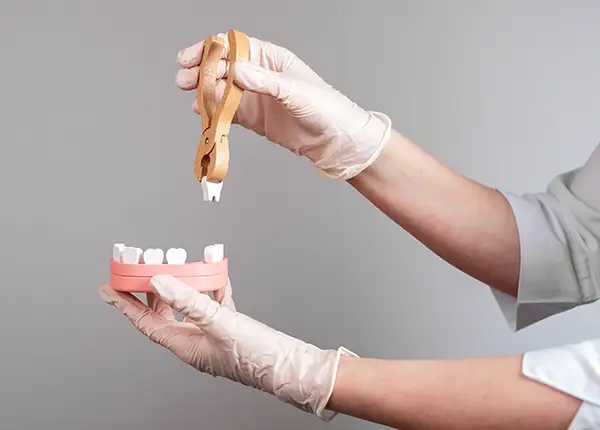 Two versions of this procedure exist, and the x-ray settles which one you are getting before you ever sit down. Our surgeon reviews your medical and dental history, images the site, and reads the degree of difficulty off the film. Two versions of this procedure exist, and the x-ray settles which one you are getting before you ever sit down. Our surgeon reviews your medical and dental history, images the site, and reads the degree of difficulty off the film.
- Simple extraction – The tooth still stands above the gum and lifts out in one piece. We numb the area with local anesthetic, loosen the tooth with an instrument called an elevator, and lift it free with forceps.
- Surgical extraction – The tooth snapped off at the gum, never erupted, or refuses to come out whole. We open a small flap of gum to reach it and take it out in sections.
Taking a tooth out in pieces protects the surrounding bone far better than levering an intact root through an opening it was never going to fit. That bone is the thing worth protecting here, and the next section explains exactly why.
Which Anesthesia Your Extraction Calls For
The tooth decides more of this than you would expect. One erupted tooth lifting out whole calls for local anesthetic and nothing beyond it, and patients are routinely surprised by how unremarkable that appointment turns out to be. Nitrous oxide gets layered on when the tooth is straightforward but you are not, and it is the lightest thing that reliably takes the edge off. IV sedation earns its place on genuinely surgical cases, on several teeth at once, or when a previous dental experience left you unwilling to sit through another. Each option carries its own fasting window, set out in our anesthesia options.
Our surgeons hold general anesthesia back for complex cases, typically in a hospital rather than our own office, and for patients whose anxiety runs moderate to severe. Raise it at the consult if that is you, rather than white-knuckling the appointment.
What Happens to the Space
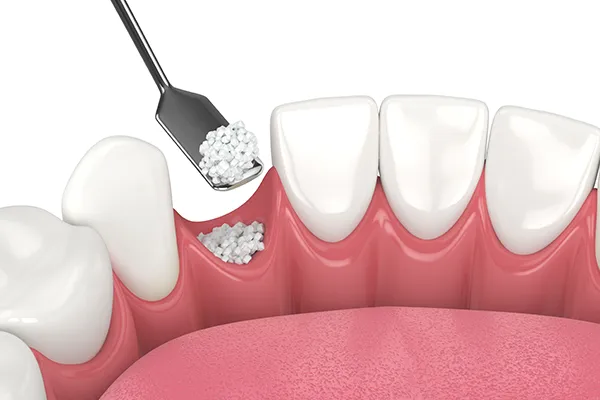 This is the part that decides how the next decade goes. The alveolar ridge, the band of bone anchoring your teeth to your jaw, keeps its shape because your teeth press on it every time you chew. Remove a tooth and that stimulus stops at the site. The bone there begins dissolving and reshaping, and nobody feels it happening. This is the part that decides how the next decade goes. The alveolar ridge, the band of bone anchoring your teeth to your jaw, keeps its shape because your teeth press on it every time you chew. Remove a tooth and that stimulus stops at the site. The bone there begins dissolving and reshaping, and nobody feels it happening.
The bill arrives later. Lose enough ridge and a dental implant in Roanoke no longer has bone to anchor into, which turns a straightforward replacement into a rebuild. Teeth on either side drift toward the gap, opening spaces that trap food and invite decay on teeth that were fine. The face over that ridge loses some of its support. Missing teeth and bone loss goes through why the ridge gives way once that stimulus stops.
The Graft That Holds the Ridge
That is why our surgeon may recommend socket preservation during the same appointment as the extraction. With the tooth out, we pack a small bone graft into the empty socket, cover it with collagen to encourage new bone, and suture it closed. The graft holds the ridge in shape while it heals, so the site is still implant-ready months later when you are ready to decide.
It is a small addition to an appointment you are already having. Skipping it is not a catastrophe, and plenty of patients do. But the ridge you have on extraction day is the most ridge you will ever have at that site, and grafting is how you keep most of it.
Getting Through the First Week
We pack the socket with sterile gauze and ask you to bite down for about forty-five minutes, which controls the bleeding and protects the clot forming underneath. Skip anything strenuous for seventy-two hours. Straws, spitting, smoking and hard food on that side are all out. The complete list lives in our post-operative instructions for extractions, and straws are the rule people negotiate with hardest.
Why Roanoke Patients Choose Our Practice
Everything downstream of the extraction stays inside one practice. The surgeon who takes the tooth out grafts the socket in the same sitting, and when you come back for the implant your imaging, your history and the record of that graft are already in the building. That continuity is the practical case for having this done inside a full-scope oral surgery practice in Roanoke instead of collecting a referral at every step and explaining your history over again.
Our second reason applies to only some of you. If the tooth is coming out for crowding, or it is a baby tooth that never let go, then it is a healthy tooth, and healthy dental pulp carries stem cells. Mountain State Oral and Facial Surgery is a StemSave office, so we can recover and cryopreserve that pulp during the extraction rather than discard it. The recovery happens inside the appointment, costing you no extra chair time, and because the cells came out of your own body there is no donor and nothing to reject. What those cells might one day treat is nobody’s to promise, which puts the whole thing in the category of a wager on future medicine rather than a service you can use. Decay and infection disqualify a tooth, and that rules out most extractions we do.
If the x-ray turns up something you did not come in for, a cyst wrapped around a root or a neighboring molar quietly failing, the surgeon who spotted it is also qualified to treat it.
Tooth Extraction Cost and Insurance
We cannot put a number on this page, and the reason is arithmetic rather than evasion. A loose tooth that lifts out whole and a molar buried in infected bone are different amounts of work and they price differently. Four things move the figure: whether the extraction is simple or surgical, which sedation you choose, whether the socket gets grafted, and how many teeth are coming out.
Grafting is the line item patients ask about most. It costs something now, it is optional, and the argument for doing it anyway is that rebuilding a collapsed ridge years later runs considerably higher than holding onto the one you already have. That is a real tradeoff rather than a sales pitch, and your surgeon will tell you plainly whether your site needs it.
Expect partial coverage on the extraction itself from most plans. Whether it bills to medical or to dental can turn on why the tooth is leaving, and a graft frequently sits under separate rules again. Our insurance and financing information names the carriers we work with. For your own numbers rather than the general case, phone the Roanoke office at (540) 283-4940 before you pick a date and our front desk will run them.
Schedule an Extraction Consultation in Roanoke
Call us at (540) 283-4940 and we will image the tooth and tell you whether it can be saved. Bring any x-rays your dentist already took, or have their office forward them, and you may save yourself a step. Or send an online appointment request and we will reach out to schedule.
You will find us at 1603 Franklin Rd SW, Roanoke, VA 24016. Our hours run 8:00 to 4:00 Monday through Thursday, with Friday closing at 2:30.
Frequently Asked Questions
Can the tooth be saved instead of pulled?
Often, and it is worth asking before you accept the extraction. Discomfort is a poor guide in both directions. A tooth that aches badly may need nothing more than a root canal and a crown, and a tooth that went quiet has not necessarily healed, because a nerve that has died stops sending signals while whatever killed it carries on underneath. Neither one settles anything. What decides it is how much solid tooth structure is left above the bone for a crown to grip, and that shows up on the x-ray rather than in how your week has felt.
Will I feel the extraction?
You will feel pressure and movement, and that surprises people who expected to feel nothing at all. Numbing shuts down sharp sensation, not the sense of push and pull, so a tooth being loosened registers as firm rocking. If anything turns sharp, say so mid-procedure rather than enduring it, because the fix is usually more anesthetic and takes about a minute. Our sedation options cover what changes if you would rather not be present for any of it.
Do I really need the bone graft?
Only if you intend to replace the tooth. That is the honest dividing line. A back molar you have decided to live without, in a mouth that chews fine already, does not need its socket held open for a future that is not coming. A tooth in your smile line, or one you will want restored eventually, is a different case entirely, and the graft is cheap insurance against a rebuild. Raise it at the consult and we will place you in one camp or the other.
How long after an extraction can I get an implant?
Three to six months is the usual answer, because the socket generally needs to fill in with solid bone before an implant has anything to grip, and a grafted site lands at the predictable end of that window. Some cases skip the wait altogether: where the bone around the socket is intact and no infection is present, an implant can go in the same day the tooth leaves, which is what our Same Day Smile option covers. Which one you are depends on what the site looks like once the tooth is out, so we would rather see it than promise you a date. Our page on single tooth replacement with implants covers the placement itself.
Can I go back to work the next day?
A desk job, usually yes. Physical work is the problem, because the seventy-two hour rule against exertion is not about how you feel, it is about blood pressure dislodging the clot. Lifting, climbing, and heavy equipment all count. If your job is physical and you cannot take three days, tell us at the consult and we will pick a date that puts those days on your weekend.
What if the tooth is already infected?
Removing the tooth is what actually ends it, since the infection lives in a structure antibiotics cannot fully reach. We sometimes prescribe antibiotics first to quiet an active infection enough to numb the area properly, because badly inflamed tissue resists anesthetic. That is a delay of days rather than weeks, and it makes the appointment itself far more comfortable. One exception worth carrying with you: swelling that spreads into your face or neck, a fever, or trouble swallowing or opening your mouth means the infection is no longer contained, and that is an emergency room the same day rather than an appointment next week.
Will insurance cover a tooth extraction?
Most plans cover extractions at least in part, and the variable people miss is the graft, which some plans treat as a separate procedure with its own rules. Sedation is the other one, since coverage often turns on whether the extraction was surgical rather than simple. Our insurance and financing information is the place to start, and our front desk can run your specific plan before you schedule.
Can you take the tooth out at the consult?
Sometimes, and sedation is what decides it. A simple extraction under local anesthetic can often happen the same day if the schedule allows. IV sedation cannot, because it requires an empty stomach and a ride home, neither of which you arranged for a consult. If you suspect you will want sedation, say so when you book and we can plan the visit around it.
|