Wisdom Teeth Removal Lynchburg, VA
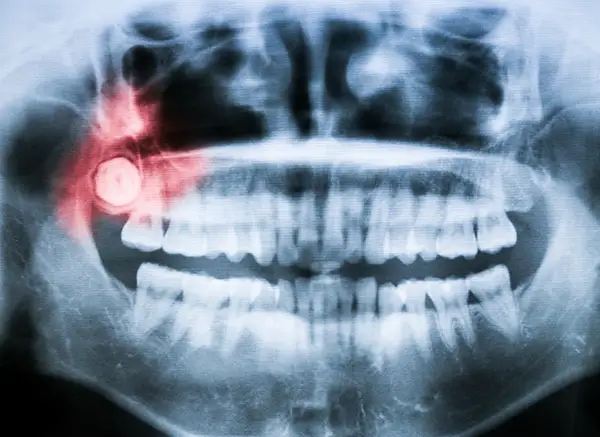 Mountain State Oral and Facial Surgery handles wisdom teeth removal in Lynchburg, VA from our office on Graves Mill Road, and a good share of the people who sit in that chair are students who would rather be anywhere else. The honest version: it’s a procedure you won’t remember, over a weekend you won’t enjoy, and then it’s done for the rest of your life. Mountain State Oral and Facial Surgery handles wisdom teeth removal in Lynchburg, VA from our office on Graves Mill Road, and a good share of the people who sit in that chair are students who would rather be anywhere else. The honest version: it’s a procedure you won’t remember, over a weekend you won’t enjoy, and then it’s done for the rest of your life.
Most patients turn up with a panoramic x-ray from their dentist and one word they only half heard. Impacted doesn’t mean infected, and it doesn’t mean urgent. It means the tooth can’t get where it’s going, and whether that matters depends on where it’s stuck and what it’s leaning on. That’s what the consult sorts out, and wisdom teeth removal is the overview of how our practice approaches it.
Our Lynchburg office runs Monday through Friday, 8:00 to 5:00. That’s a wider window than most of our locations keep, which matters more than it sounds like it should when you’re fitting a procedure and two recovery days around a class schedule.
On This Page
What Impacted Actually Means
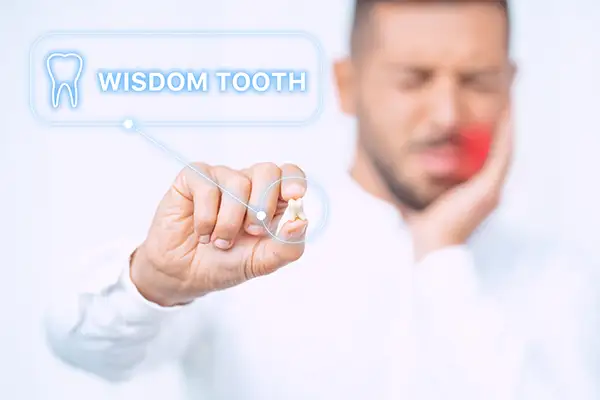 Third molars arrive between 17 and 21, which is roughly a decade after the jaw stopped growing. There’s a fixed amount of room back there and no negotiating for more. A tooth that finds enough space erupts, works, and stays. A tooth that doesn’t is stuck, and stuck teeth get described by the direction they got stuck in: angled forward into the molar in front, angled backward, lying sideways under the gum, or pointed the right way but buried too deep to surface. Third molars arrive between 17 and 21, which is roughly a decade after the jaw stopped growing. There’s a fixed amount of room back there and no negotiating for more. A tooth that finds enough space erupts, works, and stays. A tooth that doesn’t is stuck, and stuck teeth get described by the direction they got stuck in: angled forward into the molar in front, angled backward, lying sideways under the gum, or pointed the right way but buried too deep to surface.
The direction isn’t academic. A tooth angled into its neighbor grinds on a tooth you actually need, and the damage lands on the good one. A tooth lying sideways under the gum has room to build a cyst around itself, which hollows out bone without ever announcing itself. The one that pokes halfway through is the troublemaker, because the flap of gum over it traps food no toothbrush reaches, and the infection underneath flares up without much warning. There’s a longer list of what happens when they stay if you want it.
None of that is automatic, which is the part worth hearing before you assume you’re getting an appointment. Not everyone needs their wisdom teeth out. If yours came in straight, have room, and you can get a brush back there, our surgeons will tell you to keep them. The reason we push the ones that do need to go toward your late teens rather than your late twenties is that the roots are still short and the bone is still soft, and both of those work in your favor on the day and in the week after.
If It Is Not a Wisdom Tooth
None of the above applies to the rest of your mouth. A cracked molar, a tooth that failed a root canal, or one too decayed to save is a tooth extraction in Lynchburg, a different procedure on a different timeline.
Who Takes Your Wisdom Teeth Out
An oral and maxillofacial surgeon, not a general dentist. That distinction is worth thirty seconds of your attention, because it’s the reason the sedation conversation here is different from the one you’d have at a family practice. Oral and maxillofacial surgeons hold the highest level of licensure available to a dental practitioner, they’re the most qualified dental professionals to give anesthesia in an office setting, and every surgeon at Mountain State Oral and Facial Surgery is credentialed and experienced in administering it.
In practice that means the person running your sedation and the person taking the teeth out are the same person. Nobody’s handing off halfway through. Our team includes board-certified oral and maxillofacial surgeons, and the current roster with each surgeon’s training and certifications sits on Meet Our Doctors.
The Appointment, Start to Finish
Two visits, not one. The consult is short: a panoramic x-ray if your dentist didn’t send one, a look at where the roots sit relative to the nerve in the lower jaw and the sinus above the uppers, and a decision about which teeth are coming out. Nothing happens to you that day.
Picking Your Sedation
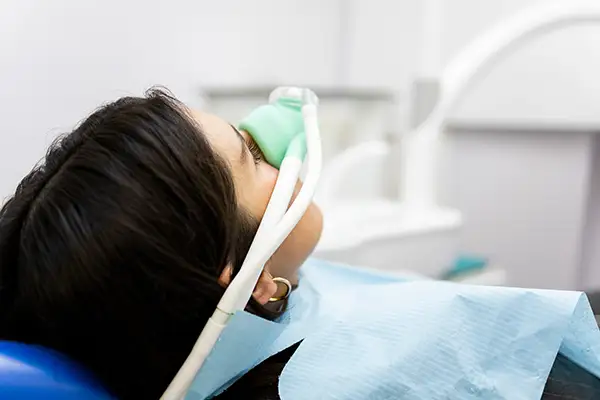 This is the choice that shapes everything else about the day, so our surgeon makes it with you at the consult rather than while you’re already in the chair. This is the choice that shapes everything else about the day, so our surgeon makes it with you at the consult rather than while you’re already in the chair.
- Local only – Numb and fully awake. You feel pressure, not the extraction. Eat breakfast, drive yourself, go to class that afternoon. Realistic for one erupted tooth, not for four buried ones.
- Nitrous plus local – Laughing gas layered over the numbing. You stay conscious but stop caring much, and it clears before you leave, so there’s no lingering fog. Nothing to eat or drink for two hours beforehand.
- IV sedation – A sedative through a line in your arm. You won’t feel the procedure and you won’t remember it. This is a preferred method for wisdom teeth at our practice, and it’s what most people having all four out choose.
General anesthesia is a fourth option and rarely the right one for a routine set of thirds. Facial trauma and jaw surgery are what it exists for, and those cases usually run in a hospital rather than our own office. One exception matters to you: if your anxiety about this is severe rather than ordinary, general anesthesia is worth asking about, and the consult is the place to do it. Our anesthesia options lay out all four in more detail, fasting rules included.
The Ride Home
If you pick IV sedation, you aren’t driving, and that isn’t something you can talk your way out of on the day. Someone has to bring you and take you back, which for most students means a roommate with a car and a free afternoon. Worth locking down before you pick a date rather than the night before. Nitrous is the exception: it wears off quickly and leaves no lingering sedative effects, so ask our team whether you’re clear to drive yourself when you book.
The Procedure Itself
Our surgeon opens a small flap of gum, takes away a bit of bone if the tooth is buried, and sections the tooth if it won’t lift out whole. Sectioning sounds worse than it is. Splitting a molar and removing it in pieces is gentler on the jaw than levering an intact one through an opening it doesn’t fit. They finish by irrigating the socket and placing a few stitches.
Before closing, our surgeon can place Exparel, a long-acting numbing medication the FDA has approved for patients aged six and up. One dose keeps the area numb through the first few days, which is the stretch you’d otherwise feel most, and it can cut the need for opioids afterward or remove it altogether.
The Week After
Plan on the weekend. Swelling peaks on days two and three and then falls off, and most patients feel recovered by the end of the first week. Skip the gym and anything strenuous for the first seventy-two hours, because raising your heart rate raises your odds of restarting the bleeding. Soft food, no straws, no smoking, no vaping. Everything else lives in our post-operative instructions for extractions. The straw is the rule people talk themselves out of around day two, and it’s the one that costs them.
What Removal Prevents
The payoff here is almost entirely negative, in the good sense: nothing happens. No flare-up the week of finals, no cyst quietly hollowing out the back of the jaw, and no cavity on the second molar, which is a tooth you need for the next sixty years and can’t replace with anything as good as itself. That’s the whole return, and it’s why our surgeons in Lynchburg would rather see you at nineteen with no symptoms than at thirty-four with an abscess.
Doing it at nineteen changes the arithmetic in three concrete ways. The roots are short, so there’s less tooth to remove and less bone to disturb getting to it. Your bone is less dense, so the tooth releases with less force. And because our surgeons are credentialed to run IV sedation right here rather than referring you elsewhere for it, all four come out in one appointment. That’s one recovery instead of a series of them spread across a semester.
There’s one more benefit, and it only exists on the day itself. Wisdom teeth are among the few sources of accessible, healthy dental pulp in an adult, and we’re a StemSave office, so the pulp inside the teeth we take out can be recovered and cryopreserved instead of discarded. It’s your own tissue, so there’s no rejection risk if it’s ever used, and the recovery happens during the extraction and adds nothing to your appointment. Nobody can tell you what it will eventually treat, so treat it as a bet on where regenerative medicine goes rather than a treatment available now. Decide at the consult, because once the teeth are gone the option goes with them.
Why Lynchburg Patients Come to Us
The 8:00 to 5:00 window Monday through Friday is wider than most of our offices keep, and on a procedure like this it does more work than it sounds like it should. An early Friday slot puts the two worst swelling days on a Saturday and Sunday. A follow-up fits into a gap between classes instead of costing you one. Small things, right up until you’re the one scheduling a procedure around a seminar you can’t miss.
The other thing worth knowing is what happens if the scan turns up something you didn’t come in for. Wisdom teeth are one procedure inside a full-scope oral surgery practice in Lynchburg, so a cyst wrapped around an impacted tooth, or a second molar already too far gone to save, stays with the surgeon who found it. The plan gets made at Graves Mill Road, and where it gets carried out depends on the case. Nobody hands you a referral and a phone number and wishes you luck.
What Wisdom Teeth Removal Costs
Nobody can give you a real number on a web page, and the reason isn’t evasiveness. Four wisdom teeth isn’t one procedure. An erupted tooth that lifts straight out and a horizontal one buried in bone are different amounts of work, and they price differently, so a single figure here would be wrong for almost everyone reading it.
The two variables that move the number most are how buried the teeth are and which sedation you pick. IV sedation costs more than local anesthesia. It’s also the reason most people get through this without remembering it, so the tradeoff is a real one rather than an upsell. Your surgeon will tell you at the consult which teeth genuinely need to go, and taking fewer teeth is a legitimate way to spend less when the scan supports it.
If you’re still on a parent’s plan, this is usually covered at least in part, and impacted extractions sometimes fall under medical rather than dental coverage depending on the plan. Bring your card to the consult so our front desk can run it before you leave, or call (434) 316-7111 ahead of time and ask. The plan list and the payment options are both on our insurance and financing information.
Book Your Lynchburg Consultation
Call (434) 316-7111 and we’ll take the x-ray and tell you straight whether these need to go. Bring the panoramic your dentist took, if you have it, because it can save you a step. If calling isn’t your thing, request an appointment online and our team will get back to you with times.
We’re at 1612 Graves Mill Road, Lynchburg, VA 24502. The office is open Monday through Friday, 8:00 to 5:00.
Frequently Asked Questions
Do I have to get them out if they do not hurt?
Not necessarily, but discomfort is a late signal rather than an early one. The American Dental Association’s threshold for necessary removal covers four situations, and only two of them give you any warning at all: the discomfort itself, and infections that keep coming back. Cysts and decay are the other two, and both build in silence. A cyst can hollow out bone for years without you feeling a thing, which is why the x-ray decides this and your symptoms don’t. That’s the entire point of a consult you can walk out of without booking.
Can I eat or drink before my appointment?
It depends entirely on which sedation you chose, so check before you assume. With local anesthesia alone, eat normally. With nitrous oxide, nothing to eat or drink for two hours beforehand. With IV sedation the fast is longer, and showing up having eaten means we reschedule you, which is a wasted trip and a wasted ride. The exact hours sit in our pre-operative instructions, along with which of your regular prescriptions to take that morning and which to leave alone.
Who has to drive me home, and can they just drop me off?
Anyone with a license and an hour to spare, and no, a drop-off doesn’t work for IV sedation. Someone has to be there when you’re discharged, because you’ll be groggy for a few hours afterward and shouldn’t be navigating a bus or a campus alone. If you’re picking sedation partly around who’s available that day, tell our surgeon at the consult. That’s a normal constraint and it factors into the plan.
Can I get all four out over a break?
Yes, and it’s the most common way students schedule this. The catch is that everyone else has the same idea, so breaks fill early and the consult has to happen first. Book the consult a few weeks ahead of the break you’re aiming for and the surgery slot tends to fall into place. If you’re leaving town for the break, have it done here before you go rather than after you get back, so your follow-up is with the surgeon who did the work.
When can I go back to the gym?
Seventy-two hours for anything strenuous, and that’s a floor rather than a target. Elevated blood pressure can dislodge the clot that’s supposed to be sealing the socket, and restarting the bleeding on day three costs you more time than the three days you were trying to save. Walking is fine immediately. Lifting, running and contact sports wait. Our post-operative FAQs cover the edge cases, including what to do if you tear something loose anyway.
Will removing my wisdom teeth make my front teeth crooked again?
No, and the reverse is a myth worth putting down too. The research doesn’t support wisdom teeth as the cause of late crowding in the front teeth. Front teeth drift with age whether or not there are third molars behind them, and the fix for that is a retainer you actually wear. What wisdom teeth genuinely do damage is the tooth immediately in front of them, which is a different problem and one you can see on the x-ray.
What do I need to bring to the consult?
Your insurance card, a list of any medications you take, and the panoramic x-ray if your dentist gave you one or sent it over. If you don’t have the x-ray, we’ll take one here, so its absence isn’t a reason to delay booking. Our first visit information covers the paperwork side, and if you’re under 18 a parent needs to be there to consent.
Am I going to need painkillers afterward?
Often not, and that’s the point of the Exparel. A dose placed at the end of the procedure keeps the area numb through the first few days, and for most patients ibuprofen handles what’s left once it wears off. Our surgeons prescribe opioids when a case genuinely calls for it, not by default, because opioids come with their own week: grogginess, nausea, and a bottle you then have to deal with. Ask at the consult and you’ll get a straight answer for your case rather than a policy.
|