Tooth Extraction Lynchburg, VA
 Mountain State Oral and Facial Surgery performs tooth extraction in Lynchburg, VA at our office on Graves Mill Road, usually because a tooth has run out of repairs rather than because anything went wrong today. Most people arrive already knowing the verdict. What they actually want is the timeline. Mountain State Oral and Facial Surgery performs tooth extraction in Lynchburg, VA at our office on Graves Mill Road, usually because a tooth has run out of repairs rather than because anything went wrong today. Most people arrive already knowing the verdict. What they actually want is the timeline.
Here it is: one tooth is a short appointment, a tender weekend, and a week of eating carefully on the other side. That is the honest shape of a tooth extraction. The longer story is what you do about the gap, because an empty socket does not stay an empty socket. It changes, and it changes quietly.
Both conversations happen at the same consult. Our Lynchburg office on Graves Mill Road runs Monday through Friday, 8:00 to 5:00, a full weekday window that makes the follow-up easy to slot in.
On This Page
Why a Tooth Comes Out
Two very different roads end at the same appointment, and knowing which one you are on changes how the rest of this page reads.
The first road is damage. Decay travelled deeper than a filling or crown can follow. A fracture ran below the gumline and left nothing standing to build on. A root canal was attempted and did not hold. An infection consumed enough of the surrounding bone that the tooth lost its foundation. In every one of those, the tooth itself is the problem and taking it out is the answer. Our surgeons still check whether a restoration could work first, because the overwhelming majority of damaged teeth never travel this far. One thing not to sit on: if swelling spreads into your face or neck, or you run a fever or start struggling to swallow, that infection has stopped being a dental appointment and needs an emergency room the same day.
The second road is planning. Your orthodontist needs room and the jaw does not have it. A baby tooth is squatting where a permanent tooth wants to come in. Nothing is wrong with those teeth at all. They are in the way of a better arrangement, which is a completely different situation, and it comes back later on this page.
What This Page Does Not Cover
Third molars run on their own timeline and their own logic, and wisdom teeth removal in Lynchburg handles that side of it. Everything below concerns the rest of your mouth.
Who Handles Your Extraction
An oral and maxillofacial surgeon does, and the distinction earns its keep mainly through what it puts on the table for you on the day.
Licensure is the short version. Oral and maxillofacial surgeons earn the highest level a dental practitioner can hold, and they are the most qualified dental professionals to administer anesthesia in an office setting. All of our surgeons are credentialed and experienced in administering it. What that buys you is practical: your sedation is not a separate visit with a separate provider, and a tooth that turns out harder than the film suggested does not become a referral halfway through the appointment.
We staff offices across West Virginia, Kentucky and Virginia, and our surgical team includes board-certified oral and maxillofacial surgeons. Meet Our Doctors carries the current roster and what every one of them trained in.
The Visit, and the Days That Follow
 The consult comes first and it is brief: your medical history, an image of the tooth, and a decision about whether it goes and how. A straightforward tooth under local anesthetic can sometimes come out at that same visit if the schedule allows. Anything involving sedation gets its own appointment, because that one depends on an empty stomach and a ride home. The consult comes first and it is brief: your medical history, an image of the tooth, and a decision about whether it goes and how. A straightforward tooth under local anesthetic can sometimes come out at that same visit if the schedule allows. Anything involving sedation gets its own appointment, because that one depends on an empty stomach and a ride home.
- Numbing, then the tooth – A tooth standing above the gum that lifts out whole is a simple extraction, handled with local anesthetic, an elevator to loosen it, and forceps. One snapped off at the gum or trapped beneath it turns surgical, and we open a small flap and remove it in sections.
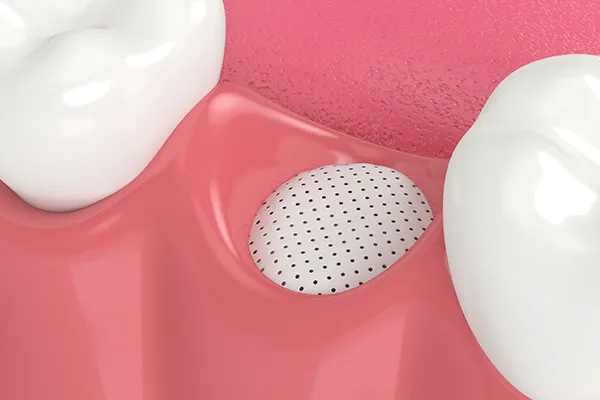
- The socket decision – With the tooth gone, this is the moment to graft the site if a replacement is anywhere in your plans. Postponing means grafting a collapsed ridge later rather than holding a full one now.
- Gauze, and forty-five minutes – We pack sterile gauze into the socket and you bite down for roughly forty-five minutes. That controls the bleeding and shelters the clot forming underneath, which is genuinely the whole job for the rest of that day.
Then comes the dull part, which is also the part that decides whether this goes smoothly. No exertion for seventy-two hours. No straws, no spitting, no smoking, nothing hard chewed on that side. Our post-operative instructions for extractions carry the complete list.
Sedation, and What Each One Asks of You
Local anesthetic asks almost nothing of you. Eat what you like beforehand, drive yourself, and carry on with the day. Nitrous oxide costs you two hours of an empty stomach beforehand and gives back a floaty half hour that has cleared by the time you reach the parking lot. IV sedation means you will not remember the appointment, and it also means somebody else is driving. General anesthesia sits outside all three, kept for complex cases and usually performed in a hospital, though our surgeons will put it back on the table if your anxiety runs beyond ordinary nerves. The full comparison, fasting windows included, is in our anesthesia options.
The Space Left Behind
 An empty socket is not a stable arrangement. The bony ridge that held your tooth keeps its thickness because chewing loads it, and the moment the tooth leaves, that load stops. The ridge begins resorbing, which is your body quietly reclaiming bone it has decided it no longer needs, and none of it hurts, so nothing ever prompts you to act. An empty socket is not a stable arrangement. The bony ridge that held your tooth keeps its thickness because chewing loads it, and the moment the tooth leaves, that load stops. The ridge begins resorbing, which is your body quietly reclaiming bone it has decided it no longer needs, and none of it hurts, so nothing ever prompts you to act.
Three things follow. A dental implant in Lynchburg needs bone to thread into, and a ridge that has been thinning for two years may not have enough left, turning one procedure into two. The neighboring teeth lean toward the gap, opening contacts that trap food and start decay on teeth that were perfectly healthy. And the tooth directly opposite, with nothing left to bite against, drifts down out of its own socket. Why that happens, and what it does to the shape of your face over the years, sits on our page about missing teeth and bone loss.
Why the Graft Is Not an Upsell
Socket preservation is a small bone graft packed into the socket the same day the tooth comes out, covered with collagen to encourage new bone and sutured closed. It holds the ridge in position while the site heals, so an implant still has somewhere to go months from now.
The honest version: you do not have to do it. If that tooth is never getting replaced, the graft buys you less. But it is a few extra minutes inside an appointment you are already having, and bone is far easier to keep than to rebuild.
What Sets Our Lynchburg Care Apart
The 8:00 to 5:00 weekday window does more work on this procedure than it sounds like it should. A suture check can drop into a lunch break instead of costing you an afternoon. If something feels off midweek, there is a full day of clinic at Graves Mill Road to ring rather than an answering service and a wait until Monday. Small things, right up until you are the one with a question and a mouth that hurts.
Then there is the case where the tooth coming out is a healthy one. If you are here for crowding, or a baby tooth that would not budge, that pulp holds stem cells, and Mountain State Oral and Facial Surgery is a StemSave office. We can recover and cryopreserve it during the extraction instead of discarding the tooth. No extra chair time, and no rejection risk down the line, since the cells started out as yours. The catch is that no one can say what they will treat, so this is a wager on regenerative medicine landing somewhere useful rather than a service with a price and a date. Teeth leaving because of decay or infection do not qualify at all.
Extraction also sits inside a full-scope oral surgery practice in Lynchburg. The graft, the implant, and anything the image turns up on the way stay with the same team rather than scattering across three offices.
Paying for a Tooth Extraction
One number here would be wrong for almost everybody reading it. The distance between a simple extraction under local anesthetic and a surgical one with IV sedation and a graft is wide, and which end you land on is a clinical fact about your tooth rather than something you pick off a menu.
Two of the variables genuinely are yours. Sedation is a real line item, and a patient who is comfortable awake pays less than one who would rather skip the experience entirely. The graft is the other, and it deserves a clear-eyed look: optional, an expense now, and the entire point of it is avoiding a larger expense later rebuilding what you could have kept. Your surgeon will tell you whether your site actually needs one.
Most plans cover extractions at least in part, and the graft sometimes falls under different rules than the extraction it follows. Bring your card to the consult and our front desk can check it while you wait, or dial (434) 316-7111 first if you would rather know before booking. Every carrier we bill and every way to pay us sits on one page, our insurance and financing information.
Book Your Extraction Consultation
Call (434) 316-7111 and we will look at the tooth and tell you exactly where it stands. If your dentist took x-rays, bring them or ask that office to send them over, because it can save you a step. Prefer to put it in writing? Request an appointment online and we will ring you back with what is open.
Our office is at 1612 Graves Mill Road, Lynchburg, VA 24502, open Monday through Friday from 8:00 to 5:00.
Frequently Asked Questions
How long does an extraction take to heal?
The gum closes over within one to two weeks and most people feel normal well before that. The socket underneath is the slower story, filling in with bone across several months without you noticing any of it. That gap between feeling healed and being healed is why we time an implant off an image rather than off how your mouth feels.
What is dry socket and when am I at risk?
Days two through four are the window, which catches people off guard because that is exactly when they start feeling better and relax the rules. A dry socket happens when the clot over the wound comes loose early, exposing the tissue and nerve beneath it, and the giveaway is discomfort that gets worse after day two instead of better. Anything that creates suction is the usual cause, so straws, spitting, smoking and vaping all stay off the table. Phone us instead of riding it out, and our post-operative FAQs set out what we actually do about one.
When can I eat normally again?
Soft food for the first few days, then chew on the other side until the site stops reminding you it is there. Temperature matters more than people expect early on, so let anything hot cool down first. Skip seeds, chips, popcorn and rice for about a week, since small hard fragments find the socket and lodge there. Nothing on this list is about the food being difficult to chew. It is about protecting the clot.
What if I just leave the gap?
Plenty of people do, and a back molar in a mouth that chews fine is the reasonable version of that choice. The cost is that it stops being a choice eventually. Bone leaves the site, neighboring teeth drift in, and the window for a straightforward implant closes somewhere along the way without announcing itself. Deciding now to leave it is fine. Deciding by default for three years is how people end up needing a rebuild instead of a replacement.
Do I need somebody to drive me home?
Only if you choose IV sedation, and then it is not negotiable on the day. Local anesthetic leaves you free to drive yourself. Nitrous oxide clears fast and leaves nothing lingering behind it, though confirm with our team when you book. If you are being sedated, plan on an adult who can stay and take you home rather than someone dropping you at the door, and ask us about rideshares before you count on one. Sort that out before you pick a date rather than the night before, because it is the detail that most often forces a reschedule.
Could I get a bridge instead of an implant?
Yes, and the tradeoff is what it costs the teeth on either side. A bridge anchors to them, which means grinding down two healthy neighbors to carry the replacement. It also sits above the ridge rather than in it, so the bone underneath keeps resorbing regardless. Your restorative dentist owns that decision with you, and our page on dental implants covers what the other route involves.
How much will it hurt afterward?
Day one is the numbness wearing off and is easier than people brace for. Discomfort peaks over the next couple of days and then falls away steadily. Over-the-counter pain relievers handle it for most patients, and ice on the cheek does more early on than anything you swallow. The trajectory is the thing to watch: steadily improving is normal, and getting worse after day two is worth a phone call.
Does insurance pay for the bone graft?
Some plans do, and it is billed separately from the extraction, which is the part that catches people out. A plan covering the extraction in full may cover the graft partially or not at all, since carriers treat it as its own procedure with its own criteria. Ask us to check both codes rather than just the extraction, and our insurance and financing information lists the plans we work with.
|