Wisdom Teeth Removal Roanoke, VA
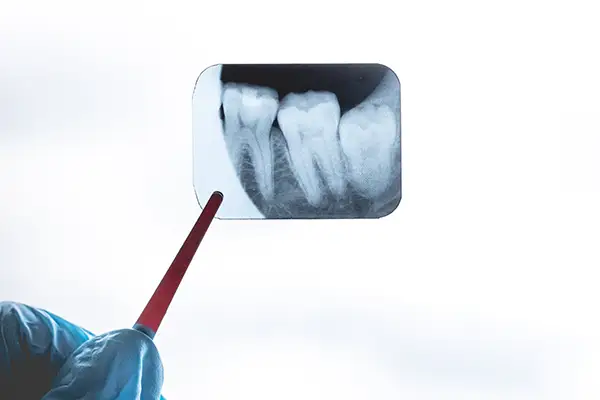 If a dentist has said the wisdom teeth need to come out, Mountain State Oral and Facial Surgery handles wisdom teeth removal in Roanoke, VA from our office on Franklin Road. Most of the people who call us about this are parents, and most of them ask the same three things: does my kid really need this done, will they be awake for it, and how many days of school is it going to cost. If a dentist has said the wisdom teeth need to come out, Mountain State Oral and Facial Surgery handles wisdom teeth removal in Roanoke, VA from our office on Franklin Road. Most of the people who call us about this are parents, and most of them ask the same three things: does my kid really need this done, will they be awake for it, and how many days of school is it going to cost.
Start with the first one, because it’s the question people assume they already know the answer to. Not every wisdom tooth has to come out. Some erupt straight, have room behind the second molars, and cause nobody any trouble, and our surgeons leave those alone. A panoramic x-ray and an exam are what separate those teeth from the ones that will never fit, which is the group wisdom teeth removal is meant for.
Our Roanoke office is on Franklin Road, and for most patients our surgeons take all four teeth in one appointment rather than splitting them across two visits. That single decision drives everything else about the day: the sedation, the recovery, and how much time you need to block off.
On This Page
Why Wisdom Teeth Come Out, and When They Stay
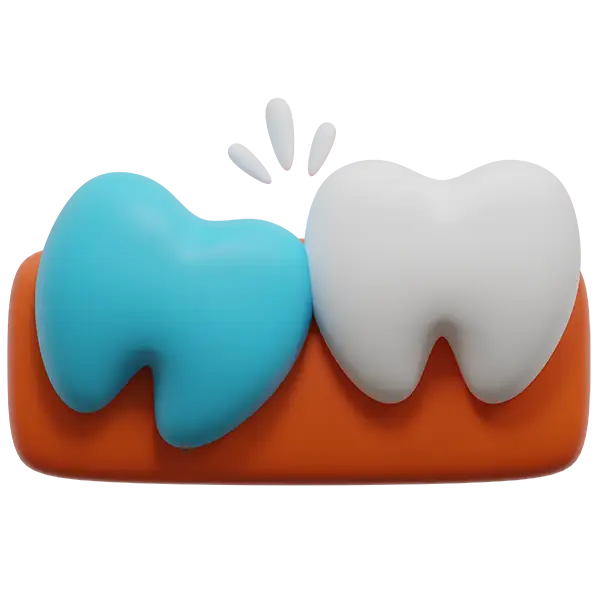 Wisdom teeth are the last molars to arrive, and for most people they show up between 17 and 21 with nowhere to go. The jaw finished growing years earlier. When there isn’t enough room behind the second molars, a third molar does one of three things, and which one it does decides whether it needs to go. Wisdom teeth are the last molars to arrive, and for most people they show up between 17 and 21 with nowhere to go. The jaw finished growing years earlier. When there isn’t enough room behind the second molars, a third molar does one of three things, and which one it does decides whether it needs to go.
- Trapped completely – The tooth never breaks through. It sits under the gum or in the bone, where it can build a cyst around itself that hollows out jawbone or damages the tooth in front of it.
- Half out – The worst of the three, because a flap of gum covers part of the tooth and nothing you own can clean underneath it. That pocket collects bacteria, and the gum infections it causes tend to come back.
- Out but crowded – The tooth erupts and leans on the second molar. You can’t floss between them properly, so decay starts on the good tooth rather than the wisdom tooth.
Those are the situations our surgeons act on. If a wisdom tooth is upright, fully through, and cleanable, it stays. The risks of not removing wisdom teeth are real, but they belong to the teeth in that list, not to every third molar in every mouth.
The Window Between 17 and 21
Roots on a third molar don’t finish forming until the mid twenties. A tooth with short roots sitting in a teenager’s softer bone lifts out cleanly. The same tooth at 35 has full-length roots locked into dense bone, and the difference shows up in the swelling, the recovery, and the odds of a complication. That’s why the recommendation lands in the mid to late teen years, and why a 16-year-old with no symptoms at all is still worth a consult.
There’s a real limit on the far side of that window. Roots on lower wisdom teeth can grow into contact with the nerve that supplies feeling to the lip and chin, and upper roots can sit right against the sinus membrane. When our surgeon sees that on the scan and the tooth isn’t causing trouble, they leave it alone. If it is causing trouble, they can take the crown off and leave the roots undisturbed, a coronectomy, which avoids dragging them past the nerve. The roots stay put and get watched on later x-rays.
One Boundary Worth Drawing
Everything here is about third molars. A broken molar, a cracked premolar, or a tooth that failed a root canal is a different problem with a different answer, and tooth extraction in Roanoke covers that side of it.
Your Wisdom Teeth Surgeons in Roanoke
Our team includes board-certified oral and maxillofacial surgeons. For wisdom teeth, the credential that carries the most weight isn’t the extraction, it’s the anesthesia. Oral and maxillofacial surgeons are the most qualified dental professionals to give anesthesia in an office setting, they hold the highest level of licensure available to a dental practitioner, and every surgeon at Mountain State Oral and Facial Surgery is credentialed and experienced in administering it.
When a parent asks who’s watching the monitor while their kid is sedated, the answer is the same person doing the surgery, and they trained for years to do both. Our surgical suites are built around that, with the monitoring systems in the room.
Whoever you see in Roanoke, the consult follows the same shape: a panoramic x-ray, a look at where the roots sit relative to the nerve and the sinus, and a straight recommendation about which teeth need to go and which can stay. Our practice runs offices across West Virginia, Kentucky and Virginia, and the current surgical roster with each surgeon’s training sits on Meet Our Doctors.
What Surgery Day Looks Like
The consult and the surgery are two separate visits, and nothing invasive happens on the first one. Our surgeon takes a panoramic x-ray, and if the lower roots look close to the nerve canal, a 3D cone beam scan shows exactly how close in three dimensions. That scan turns a judgment call into a measurement, which is why the recommendation you get is usually specific: these two, not those two, or all four while you’re down anyway.
Choosing the Sedation
Three real options, and our surgeon walks through them at the consult rather than on the morning of. Local anesthesia alone means your teenager is awake and aware, feels pressure and nothing sharper, and can eat breakfast beforehand. Nitrous oxide layers a relaxed, floaty feeling on top of the numbing, clears before you leave the building, and needs an empty stomach for two hours first. IV sedation, sometimes called twilight sedation, is a preferred method for wisdom teeth at our practice and the one most families choose for four impacted teeth. More on all four in our anesthesia options.
Under IV sedation our surgeon runs the sedative through a line in the arm. Your teenager won’t feel the extraction and won’t remember it afterward, which for an anxious seventeen-year-old is what settles the whole thing. They won’t be driving home either, so line up a ride before the day. Our pre-operative instructions cover the fasting window and what to do about medications they already take.
General anesthesia is a fourth option and a different animal. Our surgeons reserve it for complex cases and usually perform it in a hospital setting rather than at an office. For a straightforward set of four wisdom teeth, it’s almost never what you need.
Taking the Teeth Out
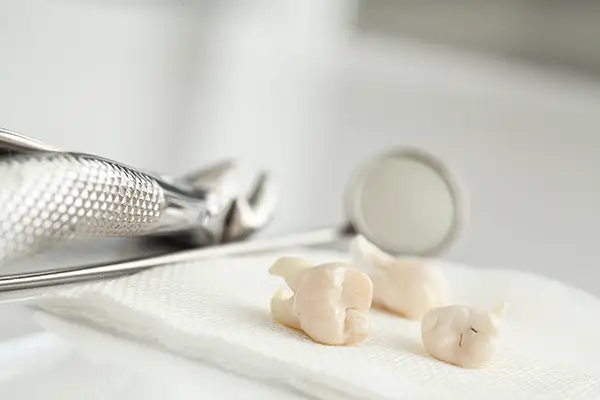 Our surgeon lifts a small flap of gum to expose the tooth and the bone around it. If the tooth is trapped, they take away a little bone to reach it, and if it won’t come out whole, they section it and remove it in pieces, which is gentler on the jaw than forcing an intact molar through an opening it doesn’t fit. Then they clean the site and close it with stitches. Our surgeon lifts a small flap of gum to expose the tooth and the bone around it. If the tooth is trapped, they take away a little bone to reach it, and if it won’t come out whole, they section it and remove it in pieces, which is gentler on the jaw than forcing an intact molar through an opening it doesn’t fit. Then they clean the site and close it with stitches.
Taking all four usually runs somewhere between thirty and sixty minutes of chair time, depending on how buried they are. You’ll be at the office longer than that, because sedation needs a recovery period afterward before we let anyone leave, so plan the morning rather than the hour.
Exparel and Getting Through Without Opioids
Before our surgeon closes, they can place Exparel in the sites. It’s a long-acting numbing medication, FDA-approved for patients as young as six, and a single dose keeps the area numb through the first few days, which is exactly the stretch when you’d feel it most. The point isn’t comfort for its own sake. Exparel can cut the need for opioids afterward or remove it entirely, and opioids bring their own problems: grogginess, constipation, nausea, and leftover pills sitting in a medicine cabinet.
Recovery, Day by Day
Day one is rest, gauze, and ice on the cheeks. Days two and three are the swelling peak, which looks considerably worse than it feels and is the reason your kid will take photos of themselves. By day four most patients are back on soft food and normal activity, and by the end of the first week most feel recovered. The socket underneath keeps filling in for a few months after that, quietly, without anyone noticing. Our post-operative instructions for extractions are the ones to follow, and the rule people break is the straw.
What You Gain by Doing This Now
The case for taking wisdom teeth out at seventeen instead of thirty-two isn’t that the teeth get more dangerous with time. It’s that the procedure gets harder, and everything downstream of it gets harder too.
| • |
One appointment instead of a series – Our surgeons are credentialed for IV sedation in the office, so all four come out in a single visit. That’s one recovery, not several spread across a school year.
|
| • |
No opioid prescription to fill – A single dose of Exparel, placed while your teenager is still numb, covers the first few days. It can reduce the need for opioids afterward or eliminate it.
|
| • |
The nerve gets measured, not estimated – Our 3D cone beam scan shows where the lower roots sit relative to the nerve canal before anyone touches anything. At seventeen those roots are usually still short and nowhere near it.
|
| • |
A Friday slot buys you the weekend – Our Roanoke office runs Monday through Thursday until 4:00 and Friday until 2:30. A Friday morning appointment puts the two worst swelling days on Saturday and Sunday. |
The other half of the case is the part nobody explains at sixteen: a tooth removed before the roots finish forming leaves a smaller wound, and a younger jaw closes it faster. That isn’t a preference of ours. It’s why the recommendation lands in the teen years rather than whenever a tooth finally starts to ache.
Why Roanoke Families Choose Our Practice
There’s something on offer at a wisdom teeth appointment that most families have never heard of, and it closes the moment the appointment does. Mountain State Oral and Facial Surgery is a StemSave office, which means the pulp inside the teeth we remove can be recovered and cryopreserved instead of discarded.
Stem cells from teeth replicate faster and for longer than stem cells taken from most other tissue, they’re your child’s own so there’s no rejection risk if they’re ever used, and the recovery happens during the extraction and adds nothing to the appointment. Wisdom teeth are one of the few teeth healthy enough and accessible enough to make it worth doing, and once they’re gone, that window closes for good.
The rest of it is scope. Wisdom teeth are one procedure inside a full-scope oral surgery practice in Roanoke, so if the scan turns up a cyst wrapped around an impacted tooth or a second molar too damaged to save, the surgeon who found it is also the one qualified to fix it. Nobody hands you a referral and starts you over somewhere else.
Wisdom Teeth Removal Cost and Insurance
Cost matters, and we’d rather be straight with you than dance around it. What we can’t do is put a number on this page, because four wisdom teeth isn’t one procedure with one price. What moves it: how many teeth are coming out, whether they’re erupted or buried in bone, which sedation you choose, and whether the case is simple enough to finish quickly.
Two of those you control. Sedation is a real line item, and a patient who’s fine with local anesthesia alone pays less than one who wants IV sedation. And a set of four taken at seventeen, before the roots have formed, is a simpler case than the same four taken at thirty. Waiting rarely makes this cheaper.
Wisdom teeth removal is usually covered at least in part, and coverage sometimes splits between medical and dental depending on the plan and on why the teeth are coming out. Our insurance and financing information covers the plans we work with and the payment options available. Call the Roanoke office at (540) 283-4940 and our front desk can check your specific benefits before you commit to a date.
Schedule a Wisdom Teeth Consultation in Roanoke
Call us at (540) 283-4940 and we’ll take the x-ray and give you a straight answer. If your teenager has never had the third molars imaged, that’s where this starts. You can also request an appointment online and someone will call you back.
We’re at 1603 Franklin Rd SW, Roanoke, VA 24016. The office runs Monday through Thursday until 4:00 and Friday until 2:30.
Frequently Asked Questions
How do I know if my teenager actually needs their wisdom teeth out?
The panoramic x-ray answers it, not the symptoms. The American Dental Association treats removal as necessary when there’s discomfort around the wisdom teeth, repeat infections, cysts, or noticeable decay. Two of those, the cysts and the decay, turn up on film long before anyone feels them. A tooth that’s upright, fully erupted, and cleanable stays where it is.
Can my teenager be put completely to sleep for this?
Usually not, and usually not necessary. General anesthesia, the fully unconscious kind, is built for complex cases like facial trauma or jaw surgery, and our surgeons typically perform it in a hospital rather than an office. It does stay on the table for patients with moderate to severe anxiety, so raise it at the consult if that describes your teen. For most families IV sedation already does the job, and our sedation options lay out where each one fits.
How many days of school will they miss?
One, if you schedule it well. A Friday appointment costs you Friday and usually nothing else, because the swelling peaks on Saturday and Sunday and then drops. Sports are the exception: no strenuous activity for the first seventy-two hours, which for a fall athlete means a conversation with the coach before you pick a date rather than after.
What is dry socket, and how do we avoid it?
A dry socket is what happens when the blood clot over the wound comes loose too early, exposing the tissue and nerve underneath, and it’s one of the most common problems after any extraction. Avoiding it is almost entirely mechanical: nothing that creates suction in the mouth for the first several days, which means no straws, no spitting, no smoking, and no vaping. Our post-operative FAQs cover what to do if it happens anyway, and the short version is to call rather than wait it out. We pack the socket with a medicated dressing, and depending on how it settles that can take a couple of short visits.
Is banking stem cells from wisdom teeth actually worth it?
It’s a bet on where regenerative medicine goes, not a treatment anyone can use today, and that’s the honest frame for deciding. What’s true right now is that dental pulp holds stem cells that replicate faster and for longer than those from most other tissue, that recovering them during a planned extraction costs nothing in appointment time, and that it’s far less invasive than drawing from bone marrow or blood. What nobody can tell you is what it will eventually treat. If you wouldn’t have banked cord blood, you probably won’t bank this either, and that’s a fine answer.
What if only two of the four need to come out?
Then we take two. Our surgeons don’t remove healthy, functional teeth to round the number up. The one thing worth weighing is that if your teenager is already having IV sedation for two lower teeth, adding two borderline uppers is a small amount of extra work inside the same recovery, while coming back for them in five years means a second appointment, a second sedation, and roots that have finished forming. Your surgeon will tell you which category yours are in.
Is thirty-five too old to have wisdom teeth removed?
No. We take wisdom teeth out of adults in their thirties, forties and beyond, usually because something finally went wrong. What changes with age is the arithmetic: fully formed roots, denser bone, more swelling, a longer week, and a higher chance of a complication. None of that makes it a bad idea when a tooth is infected or wrecking the molar beside it. It just means the easy version of this was available fifteen years ago and isn’t anymore.
Will insurance cover this if the teeth are not causing problems yet?
Some plans do and some don’t, which is exactly why it’s worth a call before you schedule rather than after. A few cover removal on the surgeon’s recommendation alone. Others want documented pathology, meaning an infection, a cyst, or visible decay, before they’ll pay for a tooth that hasn’t misbehaved yet. The panoramic x-ray and our surgeon’s notes are what make that case, and impacted extractions sometimes get billed to medical rather than dental. Our insurance and financing information is the place to start if you’d rather check the carrier list yourself first.
|