Same Day Smile Lynchburg, VA
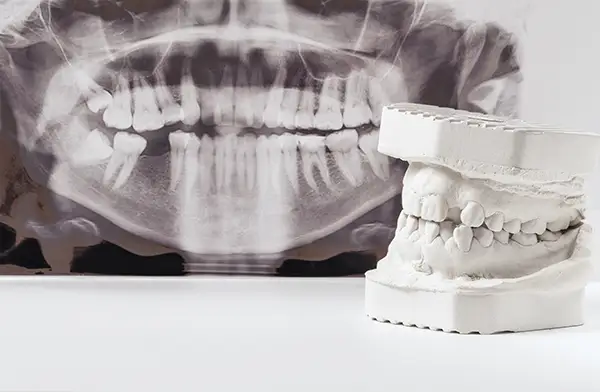 A Same Day Smile in Lynchburg, VA compresses full-arch implant treatment into one appointment at Mountain State Oral and Facial Surgery: failing teeth out, implants in, and a fixed set of teeth screwed onto those implants before you leave. Nothing removable. No months of a bare jaw and a mirror you start avoiding. It’s the same Same Day Smile protocol our surgeons run across the practice. A Same Day Smile in Lynchburg, VA compresses full-arch implant treatment into one appointment at Mountain State Oral and Facial Surgery: failing teeth out, implants in, and a fixed set of teeth screwed onto those implants before you leave. Nothing removable. No months of a bare jaw and a mirror you start avoiding. It’s the same Same Day Smile protocol our surgeons run across the practice.
The catch is that not every jaw qualifies for the same-day version, and we’d rather put that on the page than spring it at the consultation. Immediate teeth depend on the implants gripping bone tightly enough on day one to carry an arch without shifting, and some jaws don’t offer that grip. Those patients get a staged plan that arrives at the same finish a few months later. Same destination, slower road, and knowing which road you’re on before surgery day is worth more than the speed is.
Same Day Smile and All-on-4 aren’t the same thing, and the overlap confuses almost everyone who calls about it. All-on-4 is a technique: four implants, the back pair angled, and All-on-4 dental implants in Lynchburg covers that geometry. Same Day Smile is a schedule. This page is about the schedule, what has to be true for you to get it, and what the year after looks like. Both live under dental implants in Lynchburg, which we handle out of our Lynchburg office on Graves Mill Road.
On This Page
How a Same Day Smile Works
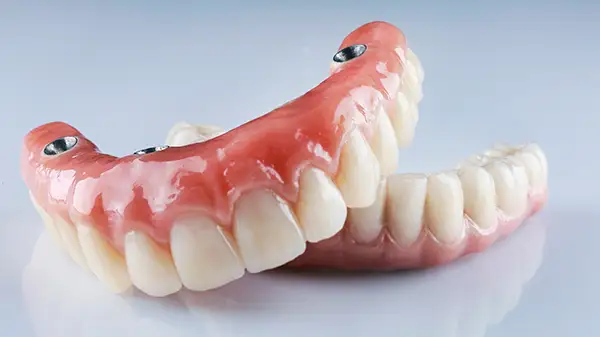 Three things happen in one sitting: extraction, placement, and the immediate provisional. The failing teeth come out. Four to six titanium posts go into the jawbone underneath them, angled to catch whatever solid bone you still have. Then we take a single arch of teeth, printed before you arrived, convert it onto those implants, and torque it down. Three things happen in one sitting: extraction, placement, and the immediate provisional. The failing teeth come out. Four to six titanium posts go into the jawbone underneath them, angled to catch whatever solid bone you still have. Then we take a single arch of teeth, printed before you arrived, convert it onto those implants, and torque it down.
The word carrying the weight there is immediate. A conventional implant sits under the gum with nothing on it for months while it fuses. An immediate-load implant carries an arch from hour one, which is only safe when the implant locks into bone hard enough at placement to resist that force. We measure it in the room with a torque reading before we commit to putting teeth on top.
The Cases That Are Not a Fit
Your jaw either grips on day one or it doesn’t, and a short list decides which.
- Bone volume – too little height or width and there’s nothing for an implant to lock into, which routes the case to grafting first or, in an upper jaw with severe loss, to the cheekbone
- Infection in the bone – gum infection we clean out at surgery, but infection that has settled into bone itself has to resolve before implants go near it
- Compromised healing – uncontrolled diabetes, heavy smoking, and certain osteoporosis medications all shift the odds against immediate loading
- A heavy bite – severe grinders can overload a provisional, and the answer is usually a staged plan rather than a tougher temporary
None of these ends the conversation. They change the route. A patient who needs grafting first still gets a fixed arch, just later. An upper jaw with nothing left to grip may end up on zygomatic dental implants anchored in the cheekbone instead. Others do better long term with implant-supported dentures in Lynchburg, trading the fixed arch for something removable and easier to keep clean.
Your Lynchburg Surgical Team
The plan we build from your scan is detailed, and it still has to meet your actual bone. Deciding whether the implants are solid enough to carry an arch today, or whether your case is better staged, comes down to measurements taken during the procedure itself. That judgment is why full-arch work belongs with an oral and maxillofacial surgeon rather than in a general dental chair.
Our surgeons include oral and maxillofacial surgeons who are board-certified, several of them through the American Board of Oral and Maxillofacial Surgery, and Meet Our Doctors carries the current roster. The training behind that runs years past dental school and covers the four things a full-arch day is built out of: anesthesia, extractions, bone, and the reconstruction that follows.
From Consultation to Final Teeth
The consultation happens weeks before surgery day, and it’s mostly a scan. Your 3D Cone Beam image gives us bone height, bone density, and the exact position of your nerve and sinus. A digital impression captures the rest. We design the implant positions and the provisional arch off that file, which is why the arch is printed and sitting there before you walk in on surgery day.
Surgery day runs a few hours under IV sedation. You stay responsive and breathing on your own, but the appointment doesn’t make it into memory. General anesthesia is a separate pathway in our practice and usually takes place in a hospital rather than an office, so IV sedation is what a Same Day Smile at Graves Mill Road actually looks like. Our anesthesia options lay out the full range.
We use Exparel on these cases, a long-acting non-opioid local anesthetic that keeps the surgical sites numb well past the appointment itself. The point of it is exactly what it sounds like: getting you through the roughest stretch of healing with less reliance on opioid medication. On a full-arch case that stretch is short and predictable, and it lands a couple of days out rather than the night of surgery.
After that it’s a waiting game with checkpoints. The implants fuse to bone over roughly three to six months while you eat soft, and you come back at intervals so we can read the bite and the soft tissue. Once the implants are solid, we take final records and make the arch that stays. Start to finish, most full-arch cases run six to twelve months, and only the first day of that looks dramatic.
Why Patients Choose a Fixed Arch
Ask someone who has worn a full upper denture what they would change and the list is rarely about appearance. It’s the roof of the mouth, the adhesive, and the arithmetic they run before ordering anything in a restaurant. A fixed arch deletes that list.
| • |
The palate stays open - An upper arch on implants is horseshoe-shaped and leaves the roof of your mouth uncovered, and we design that clearance from a Trios 5 intraoral scan rather than a tray of impression putty
|
| • |
Bite force comes back - A denture rides on gum and chews at a fraction of natural force, while an arch bolted to implants sends that force through bone, and X-Guide navigation is how the angles we planned for chewing load are the angles you actually get
|
| • |
Nothing needs managing - No adhesive, no soaking cup, no editing what you eat in public around whether the plate will hold
|
| • |
One date on the calendar - Your arch is designed and built ahead of surgery day, which is what lets us put surgery day and teeth day on the same square
|
| • |
The bite gets checked, not assumed - You come back through healing so we can catch a high spot early, rather than discovering it the day we hand you the final arch |
The trade is real and worth naming. A fixed arch is harder to clean than something you take out, and it asks more of you at the sink. That routine is also a large part of what decides how long dental implants last. Most patients decide it is a fair swap for chewing normally again. Some do not, and that is a legitimate answer.
Why Lynchburg Patients Choose Us
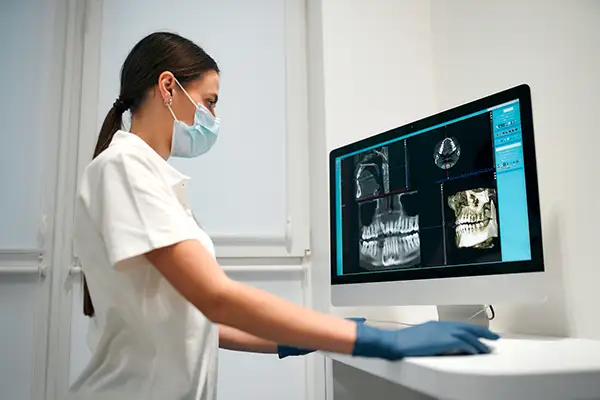 A same-day arch is a chain, and it breaks at the weakest link. The 3D Cone Beam scan has to be right about bone or the plan is fiction. The design has to become a physical arch before surgery day, not after it. The implants have to land where the design said they would, which is what X-Guide Dynamic 3D Navigation handles by tracking our position against your scan live instead of trusting a plastic guide milled two weeks earlier. Our dental technology covers every link in that chain, from the cone beam and the Trios scanner through X-Guide navigation and our SprintRay 3D printing. A same-day arch is a chain, and it breaks at the weakest link. The 3D Cone Beam scan has to be right about bone or the plan is fiction. The design has to become a physical arch before surgery day, not after it. The implants have to land where the design said they would, which is what X-Guide Dynamic 3D Navigation handles by tracking our position against your scan live instead of trusting a plastic guide milled two weeks earlier. Our dental technology covers every link in that chain, from the cone beam and the Trios scanner through X-Guide navigation and our SprintRay 3D printing.
Scope is the other half. Full-scope oral and maxillofacial surgery means a case that turns out to need a sinus lift, a graft, or X-Guide guided implant placement through unusually thin bone doesn’t become somebody else’s problem and a fresh waiting list. And because we place implants and restore them, the arch you leave in and the arch you keep are both ours to answer for.
Same Day Smile Cost and Financing
Nobody prices a full arch on a website, and it isn’t coyness. The number moves with how many implants your jaw needs, whether it needs bone work first, which material the final arch uses, and whether you’re treating one jaw or both. Those four swing the figure far enough that any number printed here would be wrong for almost everyone reading it.
What we can give you is something to watch for while you compare. An estimate that covers surgery and the provisional but stops short of the final arch is not the same estimate as one that runs to the finish, and the two look close on paper. Ask where each one ends, and ask whether grafting sits inside it or outside it. Our financial and insurance information covers which plans we file, and payment plans are available. Call our Lynchburg office at (434) 316-7111 and we’ll go through both questions with your scan in front of us.
Book Your Lynchburg Consultation
The first visit is a scan and a conversation, not a commitment. Call our Lynchburg office at (434) 316-7111 to get on the schedule. You can also request an appointment online. We’re at 1612 Graves Mill Road, Lynchburg, VA 24502. The office is open Monday through Friday, 8:00 to 5:00.
Frequently Asked Questions
How do I know before surgery day whether I will get teeth that day?
By the end of the consultation, usually. The scan measures your bone weeks ahead, and that read is reliable enough that we can tell you which side of the line you sit on before you ever book surgery day. What we can’t do is promise it, because the deciding number is a torque reading taken with the implant already in your jaw. If it comes in low we close the sites, let them heal, and bring you back for the arch a few months later.
What happens if I need bone grafting first?
You get the same arch on a longer timeline, generally four to nine months longer depending on the graft. Grafting rebuilds the ridge so an implant has something to lock into, and it isn’t a consolation prize; it’s the step that makes everything after it hold. Some grafts go in at the same appointment as the extractions and cost you no extra time at all. Others have to heal on their own first. Which one you need comes down to how much bone is missing and where, and there is more on the types under bone grafting.
How much time do I need off work?
Three to five days, and take the full week if your job puts you in front of people. Sedation alone writes off surgery day and most of the next morning. Swelling and bruising build to a peak around day two or three and then fall away quickly, and by day five most patients look normal enough to be in public without explaining themselves. Desk work from home is realistic by day three or four. Anything physical waits until we clear it.
Can I treat just the top or just the bottom?
Yes, and single-arch cases are common. Uppers and lowers fail on different schedules, so plenty of patients keep a healthy lower arch and replace only the top, or the reverse. The lower jaw is denser bone and tends to give better stability at placement, which means a lower-only case clears the same-day bar slightly more often than an upper. If you’re treating both, we do them in one appointment rather than splitting the sedation across two.
How do the implants actually attach to bone?
They don’t attach so much as get grown into. Titanium has the unusual property of letting bone bond directly onto its surface, a process called osseointegration, and across three to six months your jaw lays new bone right against the implant until the two work as one piece. There is no glue, and nothing threads into a pre-made hole the way people tend to picture it. That fusion is also why the timeline can’t be compressed: it’s biology running on its own clock rather than a construction schedule.
Is this just an expensive denture?
No, and the difference is what holds it up. A denture sits on your gums and moves as they move. A Same Day Smile arch bolts to titanium anchored in your jaw and doesn’t move at all, which is why you can chew with it and why the bone underneath stops receding. The confusing middle ground is implant supported dentures, which do use implants but snap on and off. That is a real option and the right one for some patients, but it isn’t this.
What does the arch feel like in the first week?
Bulky, and then it stops being bulky. For the first few days your tongue treats the arch as an intruder and finds every edge of it, and your speech runs slightly off, mostly on S sounds. That settles faster than patients expect, usually inside two weeks, because the mouth adapts to shape quickly. What lasts longer is the strange business of biting down and feeling pressure without feeling the tooth, since implants carry no nerve. Most people come to find that reassuring.
Does the arch ever come off?
Only when we take it off, and we do that on purpose. The arch is screw-retained, so we can unscrew it, clean everything underneath properly, inspect the implants and the tissue, and put it back the same visit. That is a maintenance feature rather than a fault, and it is a large part of why screw-retained beats cemented on full arches. Day to day it stays exactly where it is, and nothing you do at home is going to take it out.
|